NanoFil Knot
Double Palomar · Nano-Fil knot · Nano Knot
Doubled-line terminal for slick fused superline (Berkley NanoFil and similar); Palomar plus a second overhand pass.
Finished structure
No drawing of this exact knot yet. The written steps are the reference.
- Diagram in reviewA drawing of the NanoFil Knot itself is being made. Until then, follow the written steps.
Step 01
Double about 15 cm (6 in) of line into a loop and push the end of the loop through the hook eye.
No drawing of this exact knot yet. The written steps are the reference.
You should now seeBoth strands pass through the eye together without twisting, and the loop reaches well past the point of the hook.
If it goes wrongThe two strands twisting around each other as they go through the eye. On fused line this shows as a crossed pair right at the eye.
Fix: Pull the loop back out, lay the strands flat side by side and feed them through again. Pull more line through if the loop will not reach past the hook.
Why: The loop has to pass over the whole hook or lure at step 4, and the extra pass in step 3 uses up more line than a plain Palomar, so start with the full length.
- Diagram in reviewA drawing of the NanoFil Knot itself is being made. Until then, follow the written steps.
Step 02
Tie a loose overhand knot with the doubled line, letting the hook hang from the bottom of it.
No drawing of this exact knot yet. The written steps are the reference.
You should now seeA loose overhand in the doubled line with a clear hole in its middle, the hook hanging below, and the end of the loop still free.
If it goes wrongPulling the overhand snug now, or letting the two strands cross inside it. A snug overhand leaves no room for the second pass.
Fix: Open the overhand with a fingertip until you can see a clear hole in the middle, with the two strands lying side by side.
Why: The hole in this overhand is where the second pass goes in step 3. Strands that cross inside it bed unevenly when the knot is tightened.
- Diagram in reviewA drawing of the NanoFil Knot itself is being made. Until then, follow the written steps.
Step 03
Pass the end of the loop through the middle of the overhand a second time, following the first pass, to turn it into a double overhand.
No drawing of this exact knot yet. The written steps are the reference.
You should now seeTwo parallel turns of doubled line through the overhand, and the end of the loop still hanging open below the hook.
If it goes wrongSkipping the second pass, which leaves a plain Palomar, or taking the loop through the wrong opening, which shows as strands crossing instead of two parallel turns.
Fix: Back the loop out and pass it through the same opening it used the first time, laying the new turn beside the first one.
Why: The second turn gives the knot more grip on slippery fused and braided line. That extra grip is the whole difference between this knot and a standard Palomar.
- Diagram in reviewA drawing of the NanoFil Knot itself is being made. Until then, follow the written steps.
Step 04
Hold the double overhand between thumb and forefinger, pass the loop over the hook and slide it above the eye. Wet the knot, pull the standing line and tag end to tighten, test it, then trim the tag.
No drawing of this exact knot yet. The written steps are the reference.
You should now seeThe double overhand sits on top of the eye with both sides of the loop drawn up evenly, and it does not move when you pull hard on the standing line.
If it goes wrongThe loop catching on the hook shank below the eye as it tightens, so the knot sets partly down the shank with one side of the loop longer than the other.
Fix: Loosen it, lift the loop back above the eye and pull again. If it creeps under the test pull, cut it off and tie it again.
Why: Test before you trim. Slick fused line that creeps under a hand pull will creep further under a fish.
NanoFil Knot — finished-state checks, on the shared reference layout
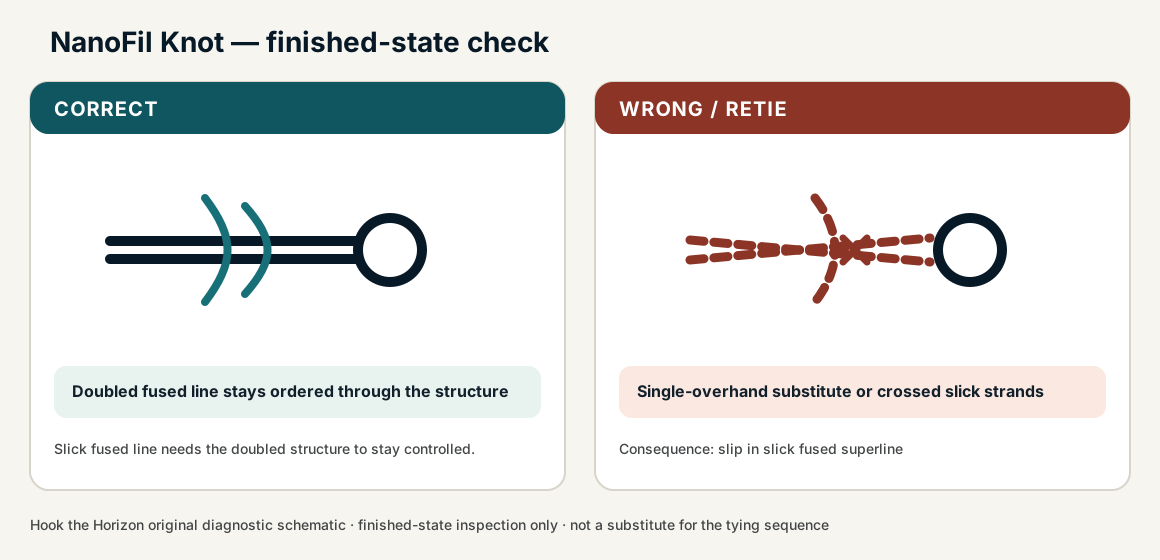
When this family fails, it fails as these. The recovered end still outranks the name.
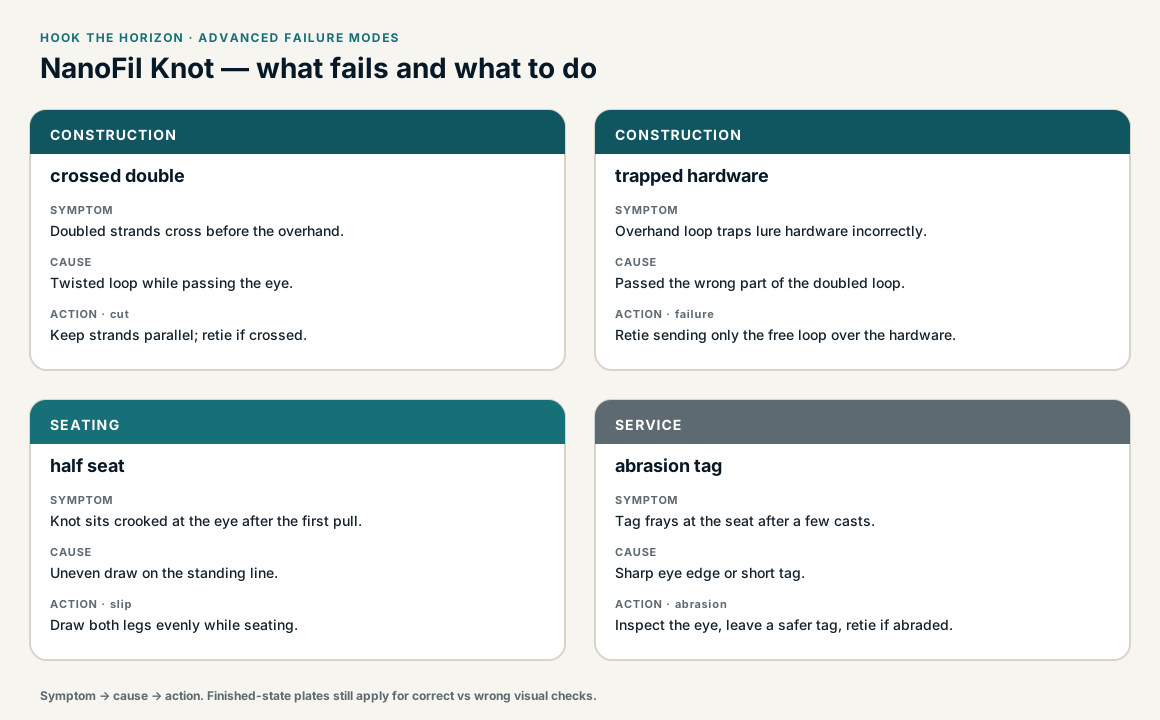
NanoFil Knot — what fails and what to do
Wraps down the standing part, then a tuck that jams the barrel to the eye.
- !Wraps walked or crossed — load on one turn of the barrel
- !Barrel never jammed to the eye, so the tuck is decoration
- !Tag never tucked, or the extra Improved / Trilene pass missing
- !The loop caught on the shank below the eye, so the knot set partly down the shank with one side of the loop longer than the other
- !Only one pass went through the overhand, leaving a plain Palomar without the second turn's extra grip on slick line
- !The second pass took a different opening, so the strands cross and bed unevenly instead of lying as two parallel turns
- !The knot creeps under a hard test pull on slick fused line
Crossed doubled NanoFil in the eye
Walks like a failed Palomar
NanoFil wants the double Palomar path, not a single overhand · step 02
Single Palomar used on NanoFil
Will slip — that is the wrong knot for this fibre
The extra pass is why the NanoFil knot exists · step 03
Hardware caught in the large loop
Cinch traps the lure; structure never forms
Keep the hook/lure out of the tying loop until the passes are in · step 02
Walks under load like a failed Palomar
Check
- ?Two overhand passes visible
- ?Compact seat at the eye
Then
- →Retie the double Palomar
- →Do not fish a single Palomar on NanoFil
Doubled strands cross before the overhand.
Check
- ?Look for: Doubled strands cross before the overhand.
Then
- →Keep strands parallel; retie if crossed.
Overhand loop traps lure hardware incorrectly.
Check
- ?Look for: Overhand loop traps lure hardware incorrectly.
Then
- →Retie sending only the free loop over the hardware.
Knot sits crooked at the eye after the first pull.
Check
- ?Look for: Knot sits crooked at the eye after the first pull.
Then
- →Draw both legs evenly while seating.
Tag frays at the seat after a few casts.
Check
- ?Look for: Tag frays at the seat after a few casts.
Then
- →Inspect the eye, leave a safer tag, retie if abraded.
Finished check failed — ordinary single-overhand Palomar is substituted
Check
- ?fused line remains doubled through the Palomar-style structure
- ?double-overhand section is clean
- ?hardware passes through the loop without twisting the doubled strands
Then
- →Retie. slip in slick fused superline.
Crossed doubled NanoFil in the eye
Check
- ?Walks like a failed Palomar
- ?Inspect step 02
Then
- →Retie. Do not dress a defective structure and call it seated.
Single Palomar used on NanoFil
Check
- ?Will slip — that is the wrong knot for this fibre
- ?Inspect step 03
Then
- →Retie. Do not dress a defective structure and call it seated.
Hardware caught in the large loop
Check
- ?Cinch traps the lure; structure never forms
- ?Inspect step 02
Then
- →Retie. Do not dress a defective structure and call it seated.
Same failure class, different geometry. Open the plates — Diagnose still starts from the symptom.
Not ideal for
- ×When the manufacturer of a different line specifies another knot
- ×Tiny eyes that will not take doubled fused line