Palomar Knot
Doubled line through eye → overhand → pass hardware through loop → seat. Strength comes from even doubled-coil compression at the eye.
Beginner · Monofilament / Fluorocarbon / Braid
Connection card
Palomar Knot
For line → hook, line → lure, line → swivel.
Doubled bight through the eye, overhand in the doubled line, loop passed over the hook, seated to the eye.
This card does not say how strong the knot is. A retention figure comes from a bench, in one material, at one diameter, tied by somebody who ties it all day — and the line in your hand is none of those. What it does tell you is whether the thing you have just tied is the thing the record describes.
What this plate is telling you
Doubled line through eye → overhand → pass hardware through loop → seat. Strength comes from even doubled-coil compression at the eye.
Save this as a picture and it works with a dead signal and a nearly dead battery, which is when a joint is most often tied badly. The rest of this page — the steps, the seating sequence, the failure modes and the bench — is for the evening before.
Before you start
- ·Check that the eye takes two strands of your line side by side without forcing. If it will not, pick a different knot.
- ·Double about 15 cm (6 in) of line. The loop has to be long enough for the whole hook or lure to pass through it.
- ·Animated Knots recommends it for braided line. Feed braid through the eye flat rather than pushing it, or it frays on the edge.
- ·Wet the knot before the final pull. Mono and fluorocarbon heat up under a fast, dry pull.
Step 1 of 5 · move 1 of 1. Fold the line in two and push the fold through the eye
swipe to step
01.1
Fold the line in two and push the fold through the eye
- Hold:
- Left hand holds the hook, eye toward you
- Move:
- Right hand doubles the line and pushes the fold through the eye
You should now see: Two strands lying side by side through the eye, the loop standing well past the hook, no twist between them.
Double about 15 cm (6 in) of line into a loop and push the loop through the hook eye.
Two strands lying side by side through the eye, the loop hanging well past the hook, no twist between them.
Forcing the doubled line through an eye that is too small. Braid frays on the edge of the eye and the two strands cross.
Fix: Pull the loop back out, lay the strands flat side by side and feed them again. If the eye will not take both strands, pick a different knot.
Why: The loop has to be long enough for the whole hook to pass through it at step 3. Too short and the hook will not clear; much longer and it tangles.
arrow keys work
Tying procedure — Palomar Knot
Step 01 / 5
Double about 15 cm (6 in) of line into a loop and push the loop through the hook eye.
You should now see: Two strands lying side by side through the eye, the loop hanging well past the hook, no twist between them.
If it goes wrong: Forcing the doubled line through an eye that is too small. Braid frays on the edge of the eye and the two strands cross.
Fix: Pull the loop back out, lay the strands flat side by side and feed them again. If the eye will not take both strands, pick a different knot.
Why: The loop has to be long enough for the whole hook to pass through it at step 3. Too short and the hook will not clear; much longer and it tangles.
1Doubled line through the eye2Tag endStep 1 of 5 · move 1 of 1
Fold the line in two and push the fold through the eye
Hold: Left hand holds the hook, eye toward you. Move: Right hand doubles the line and pushes the fold through the eye.
You should now see: Two strands lying side by side through the eye, the loop standing well past the hook, no twist between them.
Step 02 / 5
With the doubled line, tie a loose overhand knot and leave the hook hanging below it.
You should now see: A loose overhand in the doubled line, with the end of the loop still open and wider than the hook.
If it goes wrong: Snugging the overhand now, which traps the hook before it can pass through the loop.
Fix: Work the overhand open with a fingertip until the loop is wide enough for the hook again.
Why: This overhand only carries the hook for the next step. It gets tightened last, together with everything else.
1End of the loop, left openStep 2 of 5 · move 1 of 1
Tie a loose overhand in the doubled line, leaving the hook hanging below it
Hold: Left hand holds the doubled line beside the eye. Move: Right hand takes the loop round the doubled line and through, and leaves it slack.
You should now see: A loose overhand in the doubled line, with the end of the loop still open and wider than the hook.
Step 03 / 5
Pass the hook or lure all the way through the open end of the loop.
You should now see: The loop sits above the eye, clear of the hook, and the hook can turn freely.
If it goes wrong: The loop catching on the point or the bend and staying down on the hook.
Fix: Walk the loop over the point and around the bend by hand instead of pulling it through.
Why: The whole hook has to go through: point, barb and bend. A loop left on the bend makes the knot seat crooked on the eye.
1Loop, round both strandsStep 3 of 5 · move 1 of 1
Pass the hook right through the open end of the loop
Hold: Left hand keeps the overhand loose. Move: Right hand takes the loop over the whole hook and lets it settle round the line.
You should now see: The loop sits above the eye, clear of the hook, and the hook can turn freely.
Step 04 / 5
Wet the knot, then pull the standing line and the tag end together, slowly, until the coils close down against the eye.
You should now see: Coils stacked evenly against the eye, with no gaps and no strand crossing over another.
If it goes wrong: Pulling hard on dry line. Mono and fluoro heat up under a fast pull and weaken before the knot ever sees a fish.
Fix: Stop, wet the knot again and finish the pull in one steady motion.
Why: This pull is where the knot is made. Everything before it is arrangement.
1Loop closed round both strandsStep 4 of 5 · move 1 of 1
Wet the knot, then pull the standing line and the tag together until it closes
Hold: Left hand holds the hook by the bend. Move: Right hand draws the standing line and the tag together, slowly.
You should now see: Coils stacked evenly against the eye, with no gaps and no strand crossing over another.
Step 05 / 5
Give the knot a firm test pull, then trim the tag to a short stub.
You should now see: A short square tag pointing away from the coils, and a knot that did not move under the test pull.
If it goes wrong: Trimming before the test pull, or a tag that has been drawn back inside the coils.
Fix: If the knot moved or the tag is buried in the coils, cut it off and tie it again. A tag inside the coils can cut the line at the eye.
Why: Trim last. A knot that slips under your own pull will slip under a fish.
Step 5 of 5 · move 1 of 1
Give the knot a firm test pull, then trim the tag short
Hold: Left hand holds the hook. Move: Right hand pulls the standing line firmly, then trims the tag.
You should now see: A short square tag pointing away from the coils, and a knot that did not move under the test pull.
Watch the tie
How to tie the Palomar Knot (and when NOT to use it)Just The Lip Fishing · Opens on YouTubeExternal video from a creator we follow — not produced by us. Nothing on this page loads from YouTube until you follow the link.
Seating sequence — where failures are born
The step list compresses the finish. Run these phases in order, one at a time.
01 Moisten
Wet the structure before any load reaches it.
Zero. Nothing tightens yet.
02 Load
Take up slack slowly until the wraps begin to gather.
Light and even — both ends moving together.
03 Dress
Watch the wraps stack in order; stop and back off if any cross.
Hold, do not pull. Correction happens here or not at all.
04 Set
One continuous pull to full seat — no sawing, no jerks.
Firm, single direction, standing line against the terminal end.
05 Trim
Cut the tag square, leaving a short stub proud of the knot.
None. Never trim under load.
Finished structure — what correct looks like
Drawn from a rope model of this knot: which strand passes over which comes from where the rope actually lies.
- ·Doubled coils stacked cleanly against the eye
- ·Fully snug to eye with no gap
- ·Short tag exits near eye, not pulled into coils
- ·Even doubled stack, no chaotic overlaps
Verify before you load it
Every line is pass or fail. One fail means retie — do not load a knot you argued with.
- 01Doubled coils stacked cleanly against the eye
- 02Fully snug to eye with no gap
- 03Short tag exits near eye, not pulled into coils
- 04Even doubled stack, no chaotic overlaps
- 05No crossed standing/tag paths in final stack
- 06Overhand converted; hook passed through loop fully
Field notes — dark, cold, gloves
- ·Retie by feel first, light second — the seat is a tactile event, not a visual one.
- ·Gloves off for the dress phase. Fabric hides a crossing wrap.
- ·Wrong twice in a row means the material or the hardware is fighting you. Change one, not your technique.
Load direction
One strand comes in from the rod and splits at the barrel: the collar that went over the hook is doubled line, so the eye is being pulled on by two strands rather than one. That split is the whole reason a Palomar tests close to the strength of the line itself.
Two strands over the hook, one line back to the rod. If the collar ended up on a single strand, the knot is a Palomar in shape and half a Palomar in strength.
Correct vs wrong
The same knot drawn correctly and then the way it actually gets tied wrong. Only the mistake moves between plates.
Barrel square to the eye, no strand riding over another, tag pointing back along the shank.
- Standing line
- Tag end
- fault
Wrong · step 3 Bight taken over one side of the loop
The doubling that makes this knot strong is gone. One strand is carrying the whole fish and the knot tests around half of what the packet says — and it looks completely normal from the outside, which is why this one is worth knowing by sight.
Palomar Knot — construction sequence
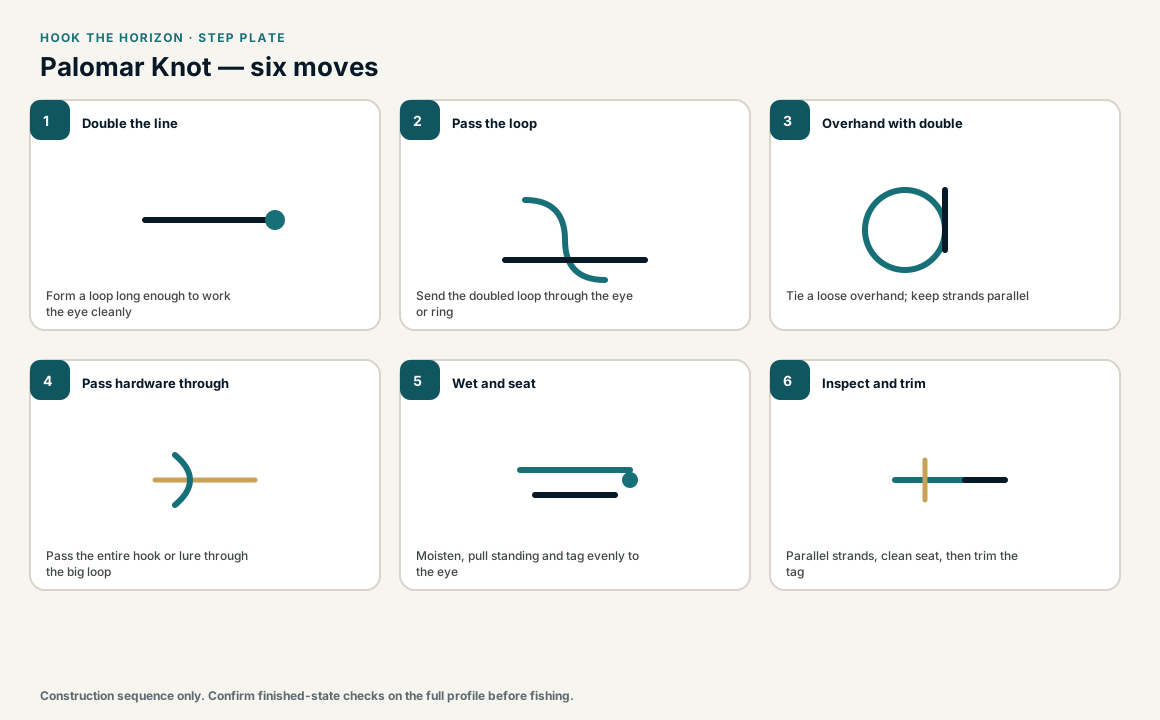
When this family fails, it fails as these. The recovered end still outranks the name.
Palomar Knot — what fails and what to do
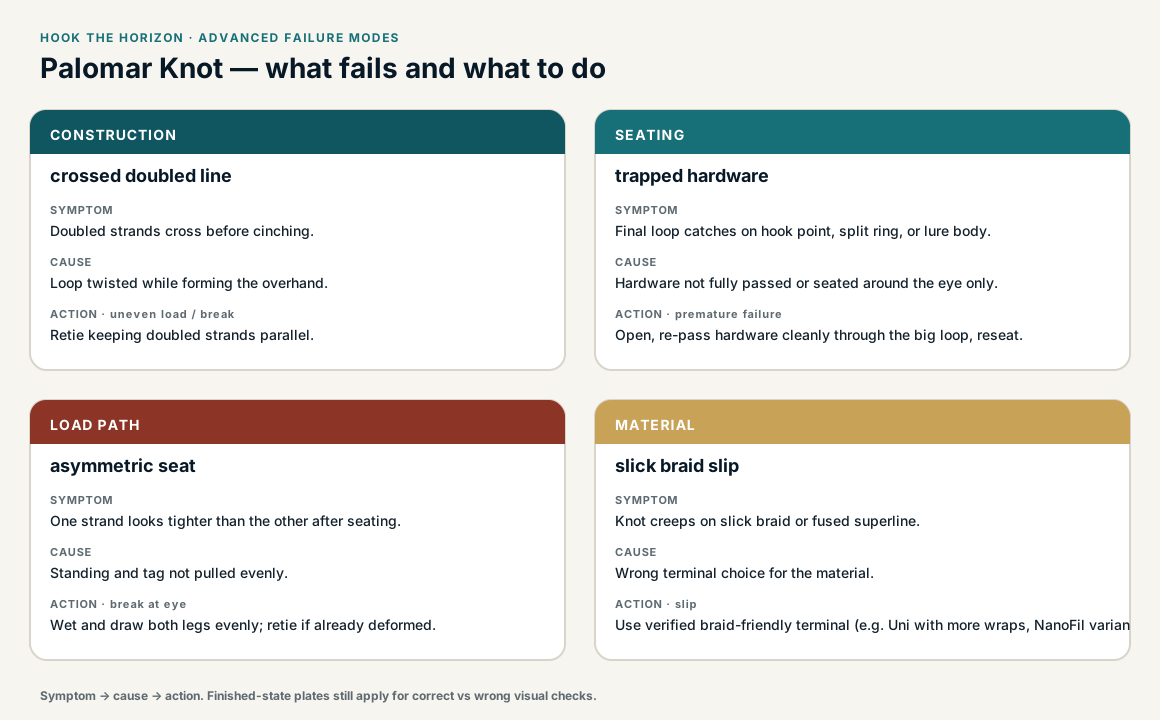
Doubled line through the eye, overhand lock seated to the hardware.
- !Eye too small for the doubled pass — the stack never sits
- !Doubled overhand not seated against the eye
- !Tag pulled into the doubled coils so the lock becomes a hinge
- !The loop is left on the bend or against the bottom of the eye, so the knot seats crooked. NetKnots warns it can fail tied that way.
- !The final pull was fast and dry, and mono or fluorocarbon heated and weakened at the knot
- !The tag has been drawn back inside the coils, where it can cut the line at the eye
- !The coils cross each other instead of stacking evenly against the eye
Doubled coils crossed at the eye
Load concentrates and can cut through the doubled stack
Palomar retention is even doubled-coil compression against the eye · step 04
Doubled stack never seated to the eye
Walks and abrades under cyclic load
The lock is the seated doubled overhand against the hardware · step 04
Tag pulled into the doubled stack
Slip under shock — the tag is now a hinge
The tag must stay outside the seated Palomar · step 05
Doubled overhand never locked
Structure is not a Palomar yet
Opposing tension after the hardware pass is the lock · step 04
Slips or walks under load
Check
- ?Inspect coil stack against the eye
- ?Confirm tag is not pulled into the knot
Then
- →Retie with moisture
- →Seat with steady opposing pressure
- →Leave a slightly longer tag
Cannot pass doubled line through eye
Check
- ?Compare doubled diameter to eye ID
Then
- →Switch to Uni or Improved Clinch for that terminal
- →Use a smaller diameter leader
Doubled strands cross before cinching.
Check
- ?Look for: Doubled strands cross before cinching.
Then
- →Retie keeping doubled strands parallel.
Final loop catches on hook point, split ring, or lure body.
Check
- ?Look for: Final loop catches on hook point, split ring, or lure body.
Then
- →Open, re-pass hardware cleanly through the big loop, reseat.
One strand looks tighter than the other after seating.
Check
- ?Look for: One strand looks tighter than the other after seating.
Then
- →Wet and draw both legs evenly; retie if already deformed.
Knot creeps on slick braid or fused superline.
Check
- ?Look for: Knot creeps on slick braid or fused superline.
Then
- →Use verified braid-friendly terminal (e.g. Uni with more wraps, NanoFil variant).
Finished check failed — doubled strands cross before cinching
Check
- ?doubled strands remain parallel
- ?overhand section is not crossed over itself
- ?final loop seats around the eye/hardware without trapping against the hook point or split ring
Then
- →Retie. uneven loading and premature breakage.
Doubled coils crossed at the eye
Check
- ?Load concentrates and can cut through the doubled stack
- ?Inspect step 04
Then
- →Retie. Do not dress a defective structure and call it seated.
Doubled stack never seated to the eye
Check
- ?Walks and abrades under cyclic load
- ?Inspect step 04
Then
- →Retie. Do not dress a defective structure and call it seated.
Tag pulled into the doubled stack
Check
- ?Slip under shock — the tag is now a hinge
- ?Inspect step 05
Then
- →Retie. Do not dress a defective structure and call it seated.
Same failure class, different geometry. Open the plates — Diagnose still starts from the symptom.
Get it right with everything in your favour0/5 clean
Good light, dry hands, a table. Until the sequence is automatic here there is nothing for the harder rungs to test — you would only be learning that difficult conditions are difficult, which you already knew.
How · Tie it, check it against the list, log it. Five clean and the ladder opens.
Nothing marked. Log it clean, or mark what happened first.
Not ideal for
- ×Eyes too small to pass the doubled line
- ×Heavy stiff fluorocarbon, which resists seating square on the eye
- ×Situations needing an easy untie
Strength, and where the number comes from
Not established
The famous 'Palomar is a 100% knot' claim dead-ends in publisher assertion — NetKnots calls it 'close to being a 100% knot' with no method or sample count — and the one IGFA-lab figure we could read (79.08% on 20 lb braid) is for an entrant's double-loop variant, not the plain knot.
Percentages come from published tests on their own line, their own knot-tyer and their own pull rate. Yours is a different system. Treat a figure as a reason to test, not as a result you already have.
- Animated Knots by Grog — Palomar
Field practice and manufacturer terminal guides (general)no link on file
- knots.fish — Knot Strength Benchmarks
Recovered from this record’s historical modelSourceId registry.
Record reviewed 2026-08-09
Vetted references
- Palomar Knot — Animated Knots by Grog
Animated Knots by Grog
- NetKnots — Palomar Knot
NetKnots
- How to tie the Palomar Knot (and when NOT to use it)
Just The Lip Fishing
Check the finished knot against what correct looks like before you load it.