World Fair Knot
World’s Fair Knot · Worlds Fair Knot
Tying mono or fluorocarbon line to a hook or lure with a doubled loop through the eye. On a drop-shot rig the tag is left long to hold the weight.
Finished structure
No drawing of this exact knot yet. The written steps are the reference.
- Diagram in reviewA drawing of the World Fair Knot itself is being made. Until then, follow the written steps.
Step 01
Double the end of the line into a loop and push the loop through the hook or lure eye.
No drawing of this exact knot yet. The written steps are the reference.
You should now seeA doubled loop standing out past the eye, long enough to fold back over the doubled line behind the eye.
If it goes wrongPushing through only a short loop. It looks fine at the eye but has no length to fold back over the doubled line.
Fix: Pull more line through the eye now so the loop can fold back with some to spare.
Why: The rest of the knot is built from this loop and the tag, so both need working length before you start.
- Diagram in reviewA drawing of the World Fair Knot itself is being made. Until then, follow the written steps.
Step 02
Fold the loop that sticks out of the eye back over the doubled line, laying it flat on top.
No drawing of this exact knot yet. The written steps are the reference.
You should now seeThe folded loop lies back along the doubled line behind the eye, with its two sides flat and not twisted.
If it goes wrongTwisting the loop as you fold it, so its two sides cross. The weave in step 3 then goes over and under the wrong strands.
Fix: Flip the loop back out, untwist it and fold it back again so both sides lie flat.
Why: The fold makes the two sides of the loop that the tag weaves across next. If they are crossed, the knot closes into a tangle instead of a lock.
- Diagram in reviewA drawing of the World Fair Knot itself is being made. Until then, follow the written steps.
Step 03
Take the tag over one side of the folded loop, under the doubled line, and over the other side of the loop. Then pass the tag through the small new loop this has just made.
No drawing of this exact knot yet. The written steps are the reference.
You should now seeThe tag crosses the folded loop in an over, under, over pattern and comes out through the new small loop, with no strand caught in the wrong place.
If it goes wrongGoing under where the tag should go over, or leaving out the final pass through the new loop. When you pull the standing line the knot slides or falls apart.
Fix: Back the tag out one crossing at a time and weave it again, checking over, under, over before making the last pass.
Why: The weave binds the folded loop to the doubled line, and the last pass through the new loop traps the tag so it cannot pull back out.
- Diagram in reviewA drawing of the World Fair Knot itself is being made. Until then, follow the written steps.
Step 04
Wet the knot and pull the standing line with gentle but firm pressure until the knot draws down onto the eye. Test it with a hard pull, then trim the tag.
No drawing of this exact knot yet. The written steps are the reference.
You should now seeA compact knot on the eye with its crossings lying side by side, and no movement under the test pull.
If it goes wrongPulling fast on dry line, so one crossing rolls over another and the knot sets lumpy. Fluorocarbon also shows a curled, rough patch near the eye.
Fix: If a crossing has rolled or the line looks curled or rough near the eye, cut it off and tie it again instead of pulling harder.
Why: Moisture lets the crossings slide into place without heating the line. For a drop-shot rig, NetKnots notes the tag is left long to hold the weight, so skip the trim there.
World Fair Knot — finished-state checks, on the shared reference layout
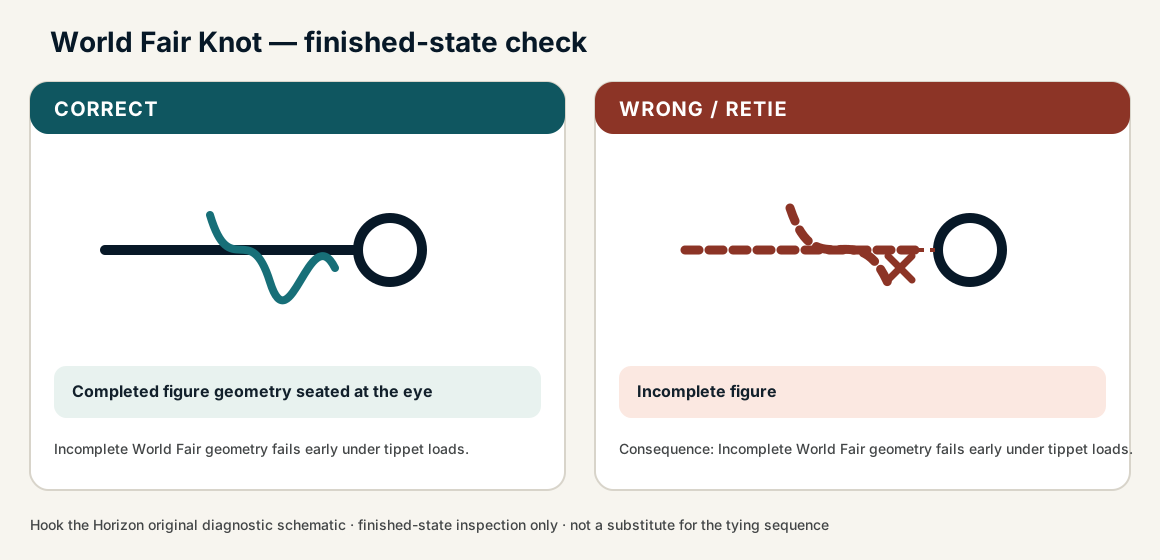
When this family fails, it fails as these. The recovered end still outranks the name.
Doubled line through the eye, overhand lock seated to the hardware.
- !Eye too small for the doubled pass — the stack never sits
- !Doubled overhand not seated against the eye
- !Tag pulled into the doubled coils so the lock becomes a hinge
- !The tag went under where it should go over, and the knot slides or falls apart when the standing line is pulled
- !The final pass through the new loop was left out, so nothing traps the tag and it can pull back out
- !The folded loop was twisted, so the knot closes into a tangle instead of a lock
- !It was pulled fast and dry, so a crossing rolled over another and the knot set lumpy
Rolled crossing instead of a folded lock
The lock opens under load
World Fair is a folded return through both openings, not a twist · step 04
Missed one return opening
Unfinished — crossings will not lock
Both openings must be taken · step 03
Used on braid
This compact fold is a nylon knot
Braid needs a braid-capable terminal · step 04
Crossings roll or the lock opens
Check
- ?Stacked crossings
- ?Compact lock at the eye
Then
- →Retie wet on mono/fluoro
- →Do not use on braid
Finished check failed — Incomplete figure
Check
- ?Completed figure geometry seated at the eye
- ?Tag controlled
- ?No open segments
Then
- →Retie. Incomplete World Fair geometry fails early under tippet loads.
Rolled crossing instead of a folded lock
Check
- ?The lock opens under load
- ?Inspect step 04
Then
- →Retie. Do not dress a defective structure and call it seated.
Missed one return opening
Check
- ?Unfinished — crossings will not lock
- ?Inspect step 03
Then
- →Retie. Do not dress a defective structure and call it seated.
Used on braid
Check
- ?This compact fold is a nylon knot
- ?Inspect step 04
Then
- →Retie. Do not dress a defective structure and call it seated.
Same failure class, different geometry. Open the plates — Diagnose still starts from the symptom.
Not ideal for
- ×Braid (not verified)
- ×Oversized stiff leader