World Fair Knot
Doubled-loop compact lock on mono/fluoro. Contest knot — not verified on braid.
Beginner · Monofilament / Fluorocarbon
Connection card
World Fair Knot
For line → hook, line → lure, line → swivel.
This card does not say how strong the knot is. A retention figure comes from a bench, in one material, at one diameter, tied by somebody who ties it all day — and the line in your hand is none of those. What it does tell you is whether the thing you have just tied is the thing the record describes.
What this plate is telling you
Doubled-loop compact lock on mono/fluoro. Contest knot — not verified on braid.
Save this as a picture and it works with a dead signal and a nearly dead battery, which is when a joint is most often tied badly. The rest of this page — the steps, the seating sequence, the failure modes and the bench — is for the evening before.
Before you start
- ·NetKnots gives it for monofilament or fluorocarbon line and does not cover braid.
- ·Pull enough doubled line through the eye for the loop to fold back over the doubled line with some to spare.
- ·Wet the knot, then close it with gentle but firm pressure on the standing line, as NetKnots describes.
- ·For a drop-shot rig, NetKnots notes the tag is left long to hold the weight, so it is not trimmed.
Step 1 of 4. Double the end of the line into a loop and push the loop through the hook or lure eye.
No drawing of this exact knot yet. The written steps are the reference.
swipe to step
01
Double the end of the line into a loop and push the loop through the hook or lure eye.
A doubled loop standing out past the eye, long enough to fold back over the doubled line behind the eye.
Pushing through only a short loop. It looks fine at the eye but has no length to fold back over the doubled line.
Fix: Pull more line through the eye now so the loop can fold back with some to spare.
Why: The rest of the knot is built from this loop and the tag, so both need working length before you start.
arrow keys work
Tying procedure — World Fair Knot
- Diagram in reviewA drawing of the World Fair Knot itself is being made. Until then, follow the written steps.
Step 01 / 4
Double the end of the line into a loop and push the loop through the hook or lure eye.
You should now see: A doubled loop standing out past the eye, long enough to fold back over the doubled line behind the eye.
If it goes wrong: Pushing through only a short loop. It looks fine at the eye but has no length to fold back over the doubled line.
Fix: Pull more line through the eye now so the loop can fold back with some to spare.
Why: The rest of the knot is built from this loop and the tag, so both need working length before you start.
- Diagram in reviewA drawing of the World Fair Knot itself is being made. Until then, follow the written steps.
Step 02 / 4
Fold the loop that sticks out of the eye back over the doubled line, laying it flat on top.
You should now see: The folded loop lies back along the doubled line behind the eye, with its two sides flat and not twisted.
If it goes wrong: Twisting the loop as you fold it, so its two sides cross. The weave in step 3 then goes over and under the wrong strands.
Fix: Flip the loop back out, untwist it and fold it back again so both sides lie flat.
Why: The fold makes the two sides of the loop that the tag weaves across next. If they are crossed, the knot closes into a tangle instead of a lock.
- Diagram in reviewA drawing of the World Fair Knot itself is being made. Until then, follow the written steps.
Step 03 / 4
Take the tag over one side of the folded loop, under the doubled line, and over the other side of the loop. Then pass the tag through the small new loop this has just made.
You should now see: The tag crosses the folded loop in an over, under, over pattern and comes out through the new small loop, with no strand caught in the wrong place.
If it goes wrong: Going under where the tag should go over, or leaving out the final pass through the new loop. When you pull the standing line the knot slides or falls apart.
Fix: Back the tag out one crossing at a time and weave it again, checking over, under, over before making the last pass.
Why: The weave binds the folded loop to the doubled line, and the last pass through the new loop traps the tag so it cannot pull back out.
If wrong: Missed one return opening — Unfinished — crossings will not lock.
- Diagram in reviewA drawing of the World Fair Knot itself is being made. Until then, follow the written steps.
Step 04 / 4
Wet the knot and pull the standing line with gentle but firm pressure until the knot draws down onto the eye. Test it with a hard pull, then trim the tag.
You should now see: A compact knot on the eye with its crossings lying side by side, and no movement under the test pull.
If it goes wrong: Pulling fast on dry line, so one crossing rolls over another and the knot sets lumpy. Fluorocarbon also shows a curled, rough patch near the eye.
Fix: If a crossing has rolled or the line looks curled or rough near the eye, cut it off and tie it again instead of pulling harder.
Why: Moisture lets the crossings slide into place without heating the line. For a drop-shot rig, NetKnots notes the tag is left long to hold the weight, so skip the trim there.
If wrong: Rolled crossing instead of a folded lock — The lock opens under load.
If wrong: Used on braid — This compact fold is a nylon knot.
Watch the tie
Palomar vs World's Fair knot — Knot Wars 2008 (shows the World's Fair tie)NorthAmericanFishing · Opens on YouTubeExternal video from a creator we follow — not produced by us. Nothing on this page loads from YouTube until you follow the link.
Seating sequence — where failures are born
The step list compresses the finish. Run these phases in order, one at a time.
01 Moisten
Wet the structure before any load reaches it.
Zero. Nothing tightens yet.
02 Load
Take up slack slowly until the wraps begin to gather.
Light and even — both ends moving together.
03 Dress
Watch the wraps stack in order; stop and back off if any cross.
Hold, do not pull. Correction happens here or not at all.
04 Set
One continuous pull to full seat — no sawing, no jerks.
Firm, single direction, standing line against the terminal end.
05 Trim
Cut the tag square, leaving a short stub proud of the knot.
None. Never trim under load.
Finished structure — what correct looks like
No drawing of this exact knot yet. The written steps are the reference.
- ·Terminal wrap or lock at the eye or along the shank
- ·Fully seated to eye or shank
- ·Tag exits clean and short
- ·Even structure, no crossings
Verify before you load it
Every line is pass or fail. One fail means retie — do not load a knot you argued with.
- 01Terminal wrap or lock at the eye or along the shank
- 02Fully seated to eye or shank
- 03Tag exits clean and short
- 04Even structure, no crossings
- 05None
- 06world-fair
Field notes — dark, cold, gloves
- ·Retie by feel first, light second — the seat is a tactile event, not a visual one.
- ·Gloves off for the dress phase. Fabric hides a crossing wrap.
- ·Wrong twice in a row means the material or the hardware is fighting you. Change one, not your technique.
World Fair Knot — finished-state checks, on the shared reference layout
When this family fails, it fails as these. The recovered end still outranks the name.
Doubled line through the eye, overhand lock seated to the hardware.
- !Eye too small for the doubled pass — the stack never sits
- !Doubled overhand not seated against the eye
- !Tag pulled into the doubled coils so the lock becomes a hinge
- !The tag went under where it should go over, and the knot slides or falls apart when the standing line is pulled
- !The final pass through the new loop was left out, so nothing traps the tag and it can pull back out
- !The folded loop was twisted, so the knot closes into a tangle instead of a lock
- !It was pulled fast and dry, so a crossing rolled over another and the knot set lumpy
Rolled crossing instead of a folded lock
The lock opens under load
World Fair is a folded return through both openings, not a twist · step 04
Missed one return opening
Unfinished — crossings will not lock
Both openings must be taken · step 03
Used on braid
This compact fold is a nylon knot
Braid needs a braid-capable terminal · step 04
Crossings roll or the lock opens
Check
- ?Stacked crossings
- ?Compact lock at the eye
Then
- →Retie wet on mono/fluoro
- →Do not use on braid
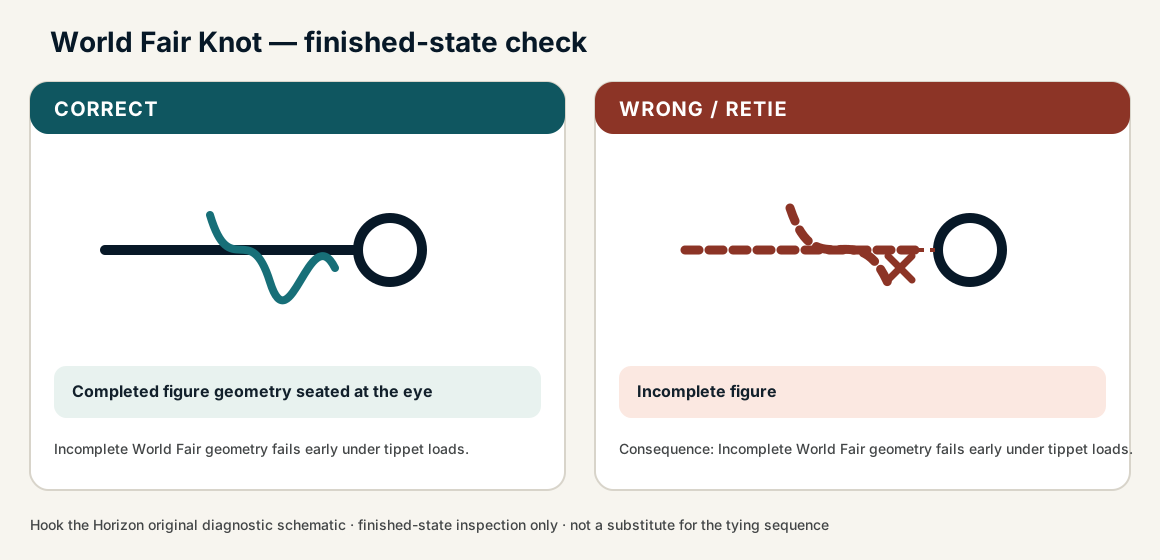
Finished check failed — Incomplete figure
Check
- ?Completed figure geometry seated at the eye
- ?Tag controlled
- ?No open segments
Then
- →Retie. Incomplete World Fair geometry fails early under tippet loads.
Rolled crossing instead of a folded lock
Check
- ?The lock opens under load
- ?Inspect step 04
Then
- →Retie. Do not dress a defective structure and call it seated.
Missed one return opening
Check
- ?Unfinished — crossings will not lock
- ?Inspect step 03
Then
- →Retie. Do not dress a defective structure and call it seated.
Used on braid
Check
- ?This compact fold is a nylon knot
- ?Inspect step 04
Then
- →Retie. Do not dress a defective structure and call it seated.
Same failure class, different geometry. Open the plates — Diagnose still starts from the symptom.
Get it right with everything in your favour0/5 clean
Good light, dry hands, a table. Until the sequence is automatic here there is nothing for the harder rungs to test — you would only be learning that difficult conditions are difficult, which you already knew.
How · Tie it, check it against the list, log it. Five clean and the ladder opens.
Nothing marked. Log it clean, or mark what happened first.
Not ideal for
- ×Braid (not verified)
- ×Oversized stiff leader
Strength, and where the number comes from
Not established
The '100% strength' claim traces to Vic Dunaway's book as repeated in reader comments, not to any test we could read.
Percentages come from published tests on their own line, their own knot-tyer and their own pull rate. Yours is a different system. Treat a figure as a reason to test, not as a result you already have.
- NetKnots — World’s Fair Knot
- Hook the Horizon — World Fair Knot
Recovered from the same record’s historical Hook the Horizon resource URL.
- NetKnots fishing knot references
Recovered from this record’s historical modelSourceId registry.
Record reviewed 2026-08-14
Vetted references
- World Fair Knot
Hook the Horizon
- Palomar vs World's Fair knot — Knot Wars 2008 (shows the World's Fair tie)
NorthAmericanFishing
Check the finished knot against what correct looks like before you load it.