Bristol Knot
Leader barrel on a doubled main line. The double is the job — a single strand is not a Bristol.
Intermediate · Braid / Monofilament / Fluorocarbon
Connection card
Bristol Knot
For double line → leader, braid → leader.
This card does not say how strong the knot is. A retention figure comes from a bench, in one material, at one diameter, tied by somebody who ties it all day — and the line in your hand is none of those. What it does tell you is whether the thing you have just tied is the thing the record describes.
What this plate is telling you
Leader barrel on a doubled main line. The double is the job — a single strand is not a Bristol.
Save this as a picture and it works with a dead signal and a nearly dead battery, which is when a joint is most often tied badly. The rest of this page — the steps, the seating sequence, the failure modes and the bench — is for the evening before.
Before you start
- ·Tie and finish a Bimini twist with a fairly short loop first. The Bristol is tied around both strands of that loop.
- ·Pull a long leader tag through the Bimini loop. It makes 5 to 7 wraps and then comes back to the start of the knot.
- ·NetKnots describes it as streamlined and says it passes through rod guides smoothly.
- ·Test the Bimini and the Bristol with a hard pull before trimming, since the join holds only as well as both knots.
Step 1 of 4. Tie a Bimini twist in the main line with a fairly short loop, and finish the Bimini completely before starting the Bristol.
No drawing of this exact knot yet. The written steps are the reference.
swipe to step
01
Tie a Bimini twist in the main line with a fairly short loop, and finish the Bimini completely before starting the Bristol.
A finished Bimini with a short loop of two strands, and a single strand of main line running into the Bimini from the reel side.
Starting on a single strand, or on a Bimini that has not been pulled up tight. Count the strands in the loop: there should be two, coming out of a firm Bimini.
Fix: Tie the Bimini first and give the double a hard pull by hand. If it slips, tie it again before going on.
Why: The leader wraps close around both strands of the Bimini loop. A short loop keeps the finished connection compact.
- Tied on a single strand — A different knot — the double is the job. No prerequisite double, no Bristol.
arrow keys work
Tying procedure — Bristol Knot
- Diagram in reviewA drawing of the Bristol Knot itself is being made. Until then, follow the written steps.
Step 01 / 4
Tie a Bimini twist in the main line with a fairly short loop, and finish the Bimini completely before starting the Bristol.
You should now see: A finished Bimini with a short loop of two strands, and a single strand of main line running into the Bimini from the reel side.
If it goes wrong: Starting on a single strand, or on a Bimini that has not been pulled up tight. Count the strands in the loop: there should be two, coming out of a firm Bimini.
Fix: Tie the Bimini first and give the double a hard pull by hand. If it slips, tie it again before going on.
Why: The leader wraps close around both strands of the Bimini loop. A short loop keeps the finished connection compact.
If wrong: Tied on a single strand — A different knot — the double is the job.
- Diagram in reviewA drawing of the Bristol Knot itself is being made. Until then, follow the written steps.
Step 02 / 4
Push the end of the leader through the Bimini loop, leaving a long tag, and hook your index finger around the leader to hold a small loop where it went through.
You should now see: The leader runs through the Bimini loop and back along the double line, with a small leader loop held open over your finger at the start.
If it goes wrong: Letting the finger loop close, or pulling too little leader through. A short tag runs out before the wraps are finished and the tag can go back.
Fix: Pull more leader through the Bimini loop and put your finger back in the leader loop before you start wrapping.
Why: The small leader loop is where the tag goes back in at the end of step 3. If it closes, there is nowhere for the tag to lock.
If wrong: Short tag cannot wrap and return — Join walks.
- Diagram in reviewA drawing of the Bristol Knot itself is being made. Until then, follow the written steps.
Step 03 / 4
Wrap the leader tag 5 to 7 times around both strands of the double line, working away from your finger. Bring the tag back and pass it through the finger loop, the opposite way to the wraps.
You should now see: 5 to 7 even leader wraps around both strands, with the tag coming out of the finger loop tucked under the first wrap.
If it goes wrong: Taking the tag back through the Bimini loop instead of the leader loop at your finger, or a wrap that misses one strand of the double. The knot pulls apart or sets lopsided.
Fix: Unwind the tag back to the mistake, check that each wrap takes in both strands, and pass the tag through the leader loop at your finger.
Why: Passing the tag back through the finger loop traps it under the first wrap when the knot closes. Wrapping both strands makes the two legs of the double pull together.
If wrong: Leader wraps crossed, or return missed both legs — Thin main cuts itself in the join.
- Diagram in reviewA drawing of the Bristol Knot itself is being made. Until then, follow the written steps.
Step 04 / 4
Wet the knot, then pull the standing leader and the double line apart slowly until the wraps close down. Test the Bimini and the Bristol with a hard pull, then trim the tag short.
You should now see: A compact barrel of leader wraps on the double line, the tag standing out at a right angle before trimming, and no movement in either knot under the test pull.
If it goes wrong: Snatching the pull on dry line, so the wraps bunch and scuff. The barrel looks uneven, with some wraps riding on top of others.
Fix: Wet it again and pull slowly. If the wraps stay bunched or either knot moves in the test, cut back to the double and tie the Bristol again.
Why: A slow, wet pull lets the stiff leader wraps bed down evenly on the thinner double line. Test both knots because the join is only as sound as the Bimini behind it.
Watch the tie
How to Tie an Improved Bristol KnotSport Fishing Magazine · Opens on YouTubeExternal video from a creator we follow — not produced by us. Nothing on this page loads from YouTube until you follow the link.
Seating sequence — where failures are born
The step list compresses the finish. Run these phases in order, one at a time.
01 Moisten
Wet the structure before any load reaches it.
Zero. Nothing tightens yet.
02 Load
Take up slack slowly until the wraps begin to gather.
Light and even — both ends moving together.
03 Dress
Watch the wraps stack in order; stop and back off if any cross.
Hold, do not pull. Correction happens here or not at all.
04 Set
One continuous pull to full seat — no sawing, no jerks.
Firm, single direction, standing line against the terminal end.
05 Trim
Cut the tag square, leaving a short stub proud of the knot.
None. Never trim under load.
Finished structure — what correct looks like
No drawing of this exact knot yet. The written steps are the reference.
- ·Completed join or loop structure
- ·Fully seated
- ·Tags short and correct path
- ·Even, no crossings
Verify before you load it
Every line is pass or fail. One fail means retie — do not load a knot you argued with.
- 01Completed join or loop structure
- 02Fully seated
- 03Tags short and correct path
- 04Even, no crossings
- 05None
- 06bristol
Field notes — dark, cold, gloves
- ·Retie by feel first, light second — the seat is a tactile event, not a visual one.
- ·Gloves off for the dress phase. Fabric hides a crossing wrap.
- ·Wrong twice in a row means the material or the hardware is fighting you. Change one, not your technique.
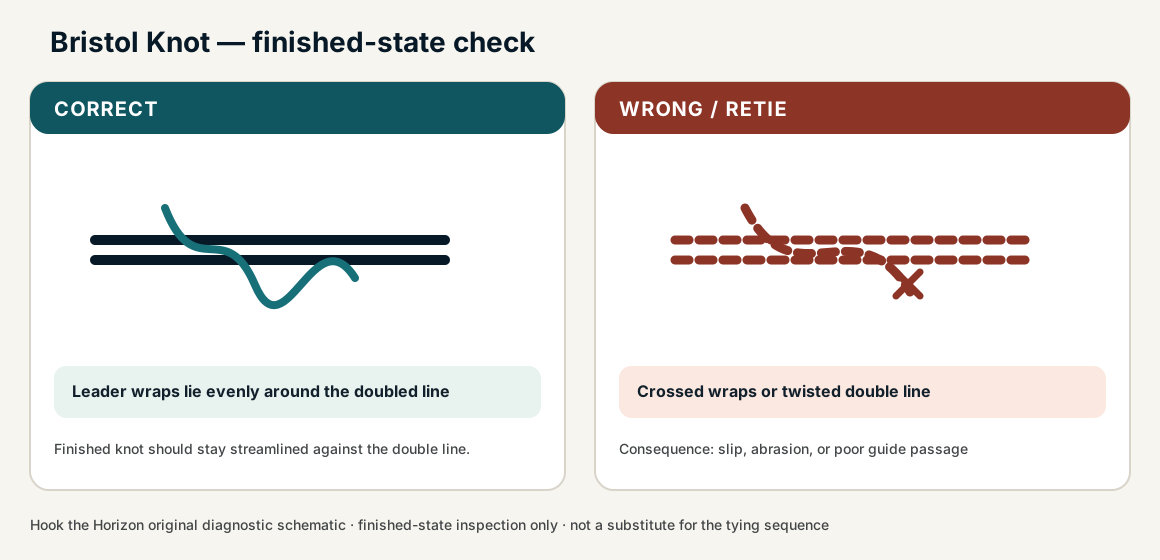
Bristol Knot — finished-state checks, on the shared reference layout
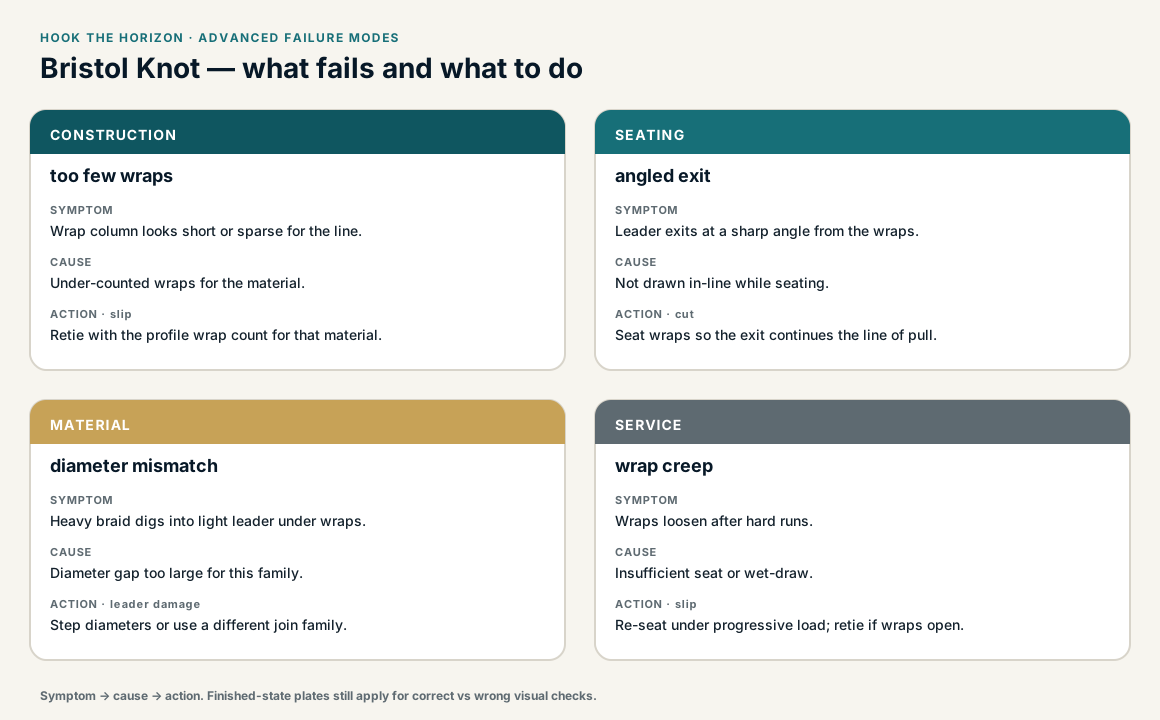
When this family fails, it fails as these. The recovered end still outranks the name.
Bristol Knot — what fails and what to do
Bight in the heavier leader; lighter line wraps the bight, then tucks.
- !Bight in the lighter line — the wraps have nothing to bite
- !Wraps walked off the bight instead of packed against the fold
- !Tag never tucked back through the bight, so the wraps dump
- !Tag returned through the Bimini loop instead of the finger loop, so the knot pulls apart
- !A wrap misses one strand of the double line, so the knot sets lopsided
- !The Bimini behind it was not pulled up tight and slips under load
- !Closed fast on dry line, so the wraps bunch and ride over each other
Leader wraps crossed, or return missed both legs
Thin main cuts itself in the join
Bristol is a barrel on a doubled main — every wrap must capture both legs · step 03
Tied on a single strand
A different knot — the double is the job
No prerequisite double, no Bristol · step 01
Short tag cannot wrap and return
Join walks
Working length has to cover wraps plus the return through both legs · step 02
Join walks or the thin main cuts itself
Check
- ?Double is load-bearing
- ?Leader barrel on both legs
Then
- →Tie a real double first
- →Retie the Bristol
Wrap column looks short or sparse for the line.
Check
- ?Look for: Wrap column looks short or sparse for the line.
Then
- →Retie with the profile wrap count for that material.
Leader exits at a sharp angle from the wraps.
Check
- ?Look for: Leader exits at a sharp angle from the wraps.
Then
- →Seat wraps so the exit continues the line of pull.
Heavy braid digs into light leader under wraps.
Check
- ?Look for: Heavy braid digs into light leader under wraps.
Then
- →Step diameters or use a different join family.
Wraps loosen after hard runs.
Check
- ?Look for: Wraps loosen after hard runs.
Then
- →Re-seat under progressive load; retie if wraps open.
Finished check failed — leader wraps cross or bunch
Check
- ?leader wraps lie evenly around the doubled line
- ?leader returns through the opening cleanly
- ?finished knot stays streamlined against the double line
Then
- →Retie. slip, abrasion, or poor guide passage.
Leader wraps crossed, or return missed both legs
Check
- ?Thin main cuts itself in the join
- ?Inspect step 03
Then
- →Retie. Do not dress a defective structure and call it seated.
Tied on a single strand
Check
- ?A different knot — the double is the job
- ?Inspect step 01
Then
- →Retie. Do not dress a defective structure and call it seated.
Short tag cannot wrap and return
Check
- ?Join walks
- ?Inspect step 02
Then
- →Retie. Do not dress a defective structure and call it seated.
Same failure class, different geometry. Open the plates — Diagnose still starts from the symptom.
Get it right with everything in your favour0/5 clean
Good light, dry hands, a table. Until the sequence is automatic here there is nothing for the harder rungs to test — you would only be learning that difficult conditions are difficult, which you already knew.
How · Tie it, check it against the list, log it. Five clean and the ladder opens.
Nothing marked. Log it clean, or mark what happened first.
Not ideal for
- ×Single-line braid-to-leader (use FG / Slim Beauty)
- ×When no double exists yet
Strength, and where the number comes from
92.1% of the weaker line
Measuredthe 'improved' Bristol variant, tied on a Bimini loop, 50 lb Spiderwire braid to 80 lb fluorocarbon, as a percent of the braid's measured unknotted break (62.8 lb); the ~77% Tom Rowland figure the catalogue used to quote could not be traced to a published test
Strongest Fishing Knots Connecting Braid to Leader — Sport Fishing (Doug Olander)
Percentages come from published tests on their own line, their own knot-tyer and their own pull rate. Yours is a different system. Treat a figure as a reason to test, not as a result you already have.
- NetKnots — Bristol Knot
- Hook the Horizon — Bristol Knot
Recovered from the same record’s historical Hook the Horizon resource URL.
Record reviewed 2026-08-14
Vetted references
- Bristol Knot
Hook the Horizon
- How to Tie an Improved Bristol Knot
Sport Fishing Magazine
Check the finished knot against what correct looks like before you load it.