Bristol Knot
No-Name knot · Improved Bristol
Shock leader onto a doubled main line so the leader barrel compresses on two strands, not one.
Line-to-line · Intermediate · Braid / Monofilament / Fluorocarbon · 4 steps
ApplicationsHow to tie itFinished structure
No drawing of this exact knot yet. The written steps are the reference.
- Diagram in reviewA drawing of the Bristol Knot itself is being made. Until then, follow the written steps.
Step 01
Tie a Bimini twist in the main line with a fairly short loop, and finish the Bimini completely before starting the Bristol.
No drawing of this exact knot yet. The written steps are the reference.
You should now seeA finished Bimini with a short loop of two strands, and a single strand of main line running into the Bimini from the reel side.
If it goes wrongStarting on a single strand, or on a Bimini that has not been pulled up tight. Count the strands in the loop: there should be two, coming out of a firm Bimini.
Fix: Tie the Bimini first and give the double a hard pull by hand. If it slips, tie it again before going on.
Why: The leader wraps close around both strands of the Bimini loop. A short loop keeps the finished connection compact.
- Diagram in reviewA drawing of the Bristol Knot itself is being made. Until then, follow the written steps.
Step 02
Push the end of the leader through the Bimini loop, leaving a long tag, and hook your index finger around the leader to hold a small loop where it went through.
No drawing of this exact knot yet. The written steps are the reference.
You should now seeThe leader runs through the Bimini loop and back along the double line, with a small leader loop held open over your finger at the start.
If it goes wrongLetting the finger loop close, or pulling too little leader through. A short tag runs out before the wraps are finished and the tag can go back.
Fix: Pull more leader through the Bimini loop and put your finger back in the leader loop before you start wrapping.
Why: The small leader loop is where the tag goes back in at the end of step 3. If it closes, there is nowhere for the tag to lock.
- Diagram in reviewA drawing of the Bristol Knot itself is being made. Until then, follow the written steps.
Step 03
Wrap the leader tag 5 to 7 times around both strands of the double line, working away from your finger. Bring the tag back and pass it through the finger loop, the opposite way to the wraps.
No drawing of this exact knot yet. The written steps are the reference.
You should now see5 to 7 even leader wraps around both strands, with the tag coming out of the finger loop tucked under the first wrap.
If it goes wrongTaking the tag back through the Bimini loop instead of the leader loop at your finger, or a wrap that misses one strand of the double. The knot pulls apart or sets lopsided.
Fix: Unwind the tag back to the mistake, check that each wrap takes in both strands, and pass the tag through the leader loop at your finger.
Why: Passing the tag back through the finger loop traps it under the first wrap when the knot closes. Wrapping both strands makes the two legs of the double pull together.
- Diagram in reviewA drawing of the Bristol Knot itself is being made. Until then, follow the written steps.
Step 04
Wet the knot, then pull the standing leader and the double line apart slowly until the wraps close down. Test the Bimini and the Bristol with a hard pull, then trim the tag short.
No drawing of this exact knot yet. The written steps are the reference.
You should now seeA compact barrel of leader wraps on the double line, the tag standing out at a right angle before trimming, and no movement in either knot under the test pull.
If it goes wrongSnatching the pull on dry line, so the wraps bunch and scuff. The barrel looks uneven, with some wraps riding on top of others.
Fix: Wet it again and pull slowly. If the wraps stay bunched or either knot moves in the test, cut back to the double and tie the Bristol again.
Why: A slow, wet pull lets the stiff leader wraps bed down evenly on the thinner double line. Test both knots because the join is only as sound as the Bimini behind it.
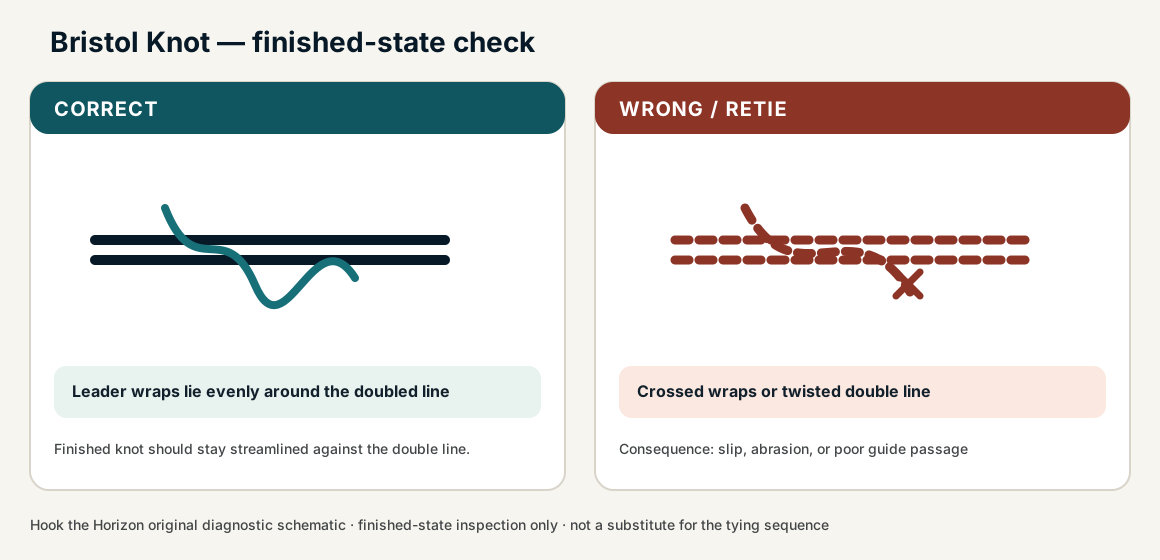
Bristol Knot — finished-state checks, on the shared reference layout
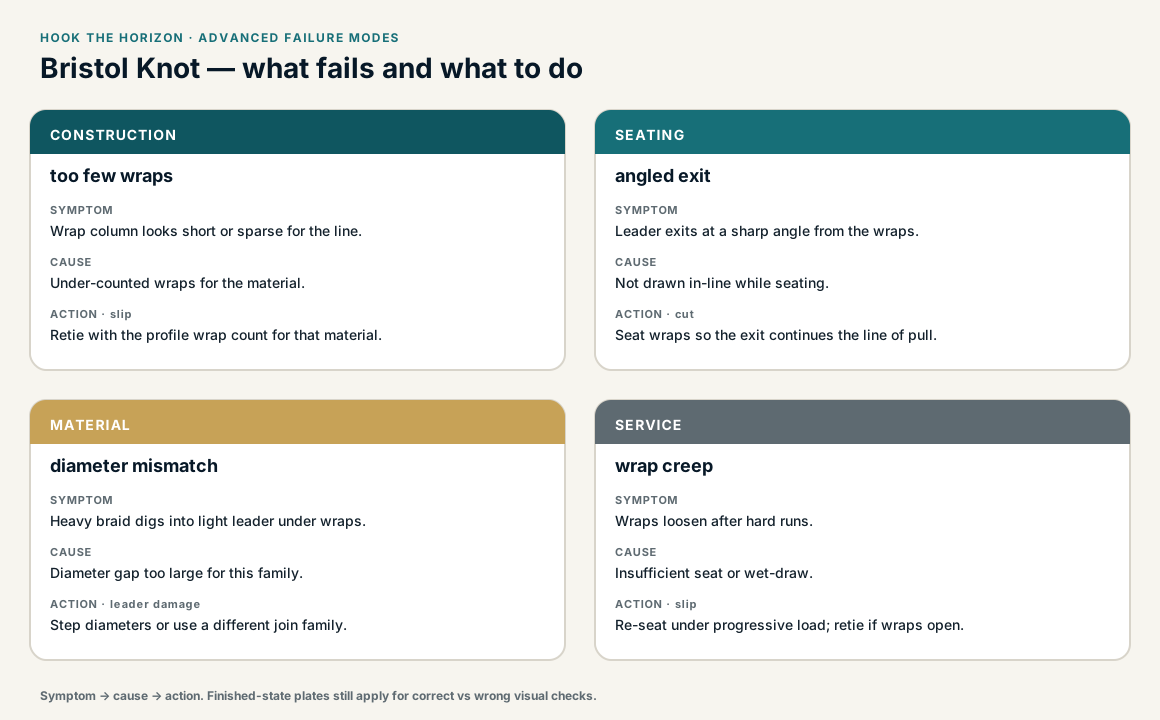
When this family fails, it fails as these. The recovered end still outranks the name.
Bristol Knot — what fails and what to do
Bight in the heavier leader; lighter line wraps the bight, then tucks.
- !Bight in the lighter line — the wraps have nothing to bite
- !Wraps walked off the bight instead of packed against the fold
- !Tag never tucked back through the bight, so the wraps dump
- !Tag returned through the Bimini loop instead of the finger loop, so the knot pulls apart
- !A wrap misses one strand of the double line, so the knot sets lopsided
- !The Bimini behind it was not pulled up tight and slips under load
- !Closed fast on dry line, so the wraps bunch and ride over each other
Leader wraps crossed, or return missed both legs
Thin main cuts itself in the join
Bristol is a barrel on a doubled main — every wrap must capture both legs · step 03
Tied on a single strand
A different knot — the double is the job
No prerequisite double, no Bristol · step 01
Short tag cannot wrap and return
Join walks
Working length has to cover wraps plus the return through both legs · step 02
Join walks or the thin main cuts itself
Check
- ?Double is load-bearing
- ?Leader barrel on both legs
Then
- →Tie a real double first
- →Retie the Bristol
Wrap column looks short or sparse for the line.
Check
- ?Look for: Wrap column looks short or sparse for the line.
Then
- →Retie with the profile wrap count for that material.
Leader exits at a sharp angle from the wraps.
Check
- ?Look for: Leader exits at a sharp angle from the wraps.
Then
- →Seat wraps so the exit continues the line of pull.
Heavy braid digs into light leader under wraps.
Check
- ?Look for: Heavy braid digs into light leader under wraps.
Then
- →Step diameters or use a different join family.
Wraps loosen after hard runs.
Check
- ?Look for: Wraps loosen after hard runs.
Then
- →Re-seat under progressive load; retie if wraps open.
Finished check failed — leader wraps cross or bunch
Check
- ?leader wraps lie evenly around the doubled line
- ?leader returns through the opening cleanly
- ?finished knot stays streamlined against the double line
Then
- →Retie. slip, abrasion, or poor guide passage.
Leader wraps crossed, or return missed both legs
Check
- ?Thin main cuts itself in the join
- ?Inspect step 03
Then
- →Retie. Do not dress a defective structure and call it seated.
Tied on a single strand
Check
- ?A different knot — the double is the job
- ?Inspect step 01
Then
- →Retie. Do not dress a defective structure and call it seated.
Short tag cannot wrap and return
Check
- ?Join walks
- ?Inspect step 02
Then
- →Retie. Do not dress a defective structure and call it seated.
Same failure class, different geometry. Open the plates — Diagnose still starts from the symptom.
Not ideal for
- ×Single-line braid-to-leader (use FG / Slim Beauty)
- ×When no double exists yet