Bristol Knot
Wrap stack · Constriction
Does not pick a knot
This page does not pick a knot for you. DNA, molecules, quantum braids and vortices stay off Decide.
Finished structure
No drawing of this exact knot yet. The written steps are the reference.
Bristol Knot — finished-state checks, on the shared reference layout
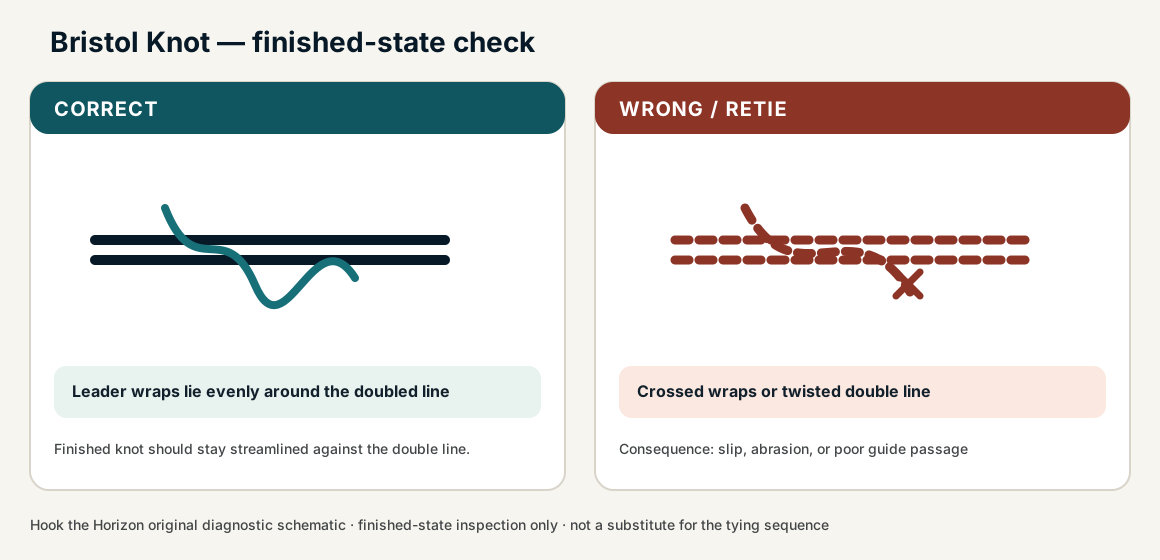
When this family fails, it fails as these. The recovered end still outranks the name.
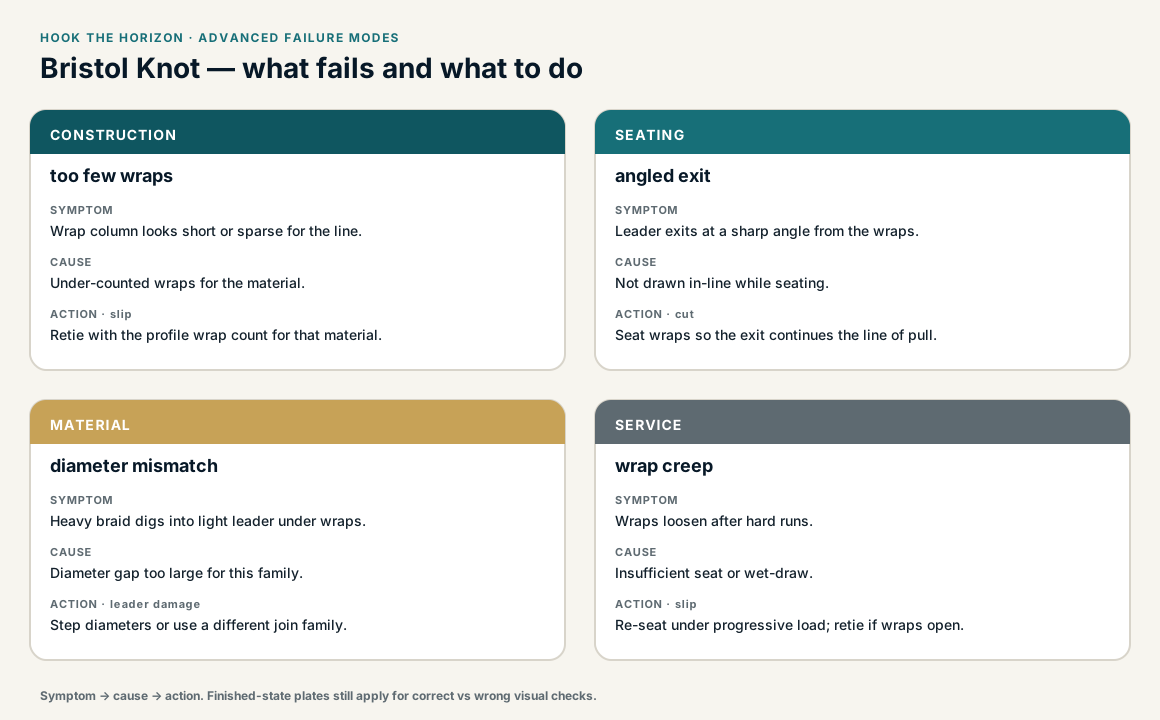
Bristol Knot — what fails and what to do
Bight in the heavier leader; lighter line wraps the bight, then tucks.
- !Bight in the lighter line — the wraps have nothing to bite
- !Wraps walked off the bight instead of packed against the fold
- !Tag never tucked back through the bight, so the wraps dump
- !Tag returned through the Bimini loop instead of the finger loop, so the knot pulls apart
- !A wrap misses one strand of the double line, so the knot sets lopsided
- !The Bimini behind it was not pulled up tight and slips under load
- !Closed fast on dry line, so the wraps bunch and ride over each other
Leader wraps crossed, or return missed both legs
Thin main cuts itself in the join
Bristol is a barrel on a doubled main — every wrap must capture both legs · step 03
Tied on a single strand
A different knot — the double is the job
No prerequisite double, no Bristol · step 01
Short tag cannot wrap and return
Join walks
Working length has to cover wraps plus the return through both legs · step 02
Join walks or the thin main cuts itself
Check
- ?Double is load-bearing
- ?Leader barrel on both legs
Then
- →Tie a real double first
- →Retie the Bristol
Wrap column looks short or sparse for the line.
Check
- ?Look for: Wrap column looks short or sparse for the line.
Then
- →Retie with the profile wrap count for that material.
Leader exits at a sharp angle from the wraps.
Check
- ?Look for: Leader exits at a sharp angle from the wraps.
Then
- →Seat wraps so the exit continues the line of pull.
Heavy braid digs into light leader under wraps.
Check
- ?Look for: Heavy braid digs into light leader under wraps.
Then
- →Step diameters or use a different join family.
Wraps loosen after hard runs.
Check
- ?Look for: Wraps loosen after hard runs.
Then
- →Re-seat under progressive load; retie if wraps open.
Finished check failed — leader wraps cross or bunch
Check
- ?leader wraps lie evenly around the doubled line
- ?leader returns through the opening cleanly
- ?finished knot stays streamlined against the double line
Then
- →Retie. slip, abrasion, or poor guide passage.
Leader wraps crossed, or return missed both legs
Check
- ?Thin main cuts itself in the join
- ?Inspect step 03
Then
- →Retie. Do not dress a defective structure and call it seated.
Tied on a single strand
Check
- ?A different knot — the double is the job
- ?Inspect step 01
Then
- →Retie. Do not dress a defective structure and call it seated.
Short tag cannot wrap and return
Check
- ?Join walks
- ?Inspect step 02
Then
- →Retie. Do not dress a defective structure and call it seated.
Same failure class, different geometry. Open the plates — Diagnose still starts from the symptom.
What holds it
- ·A bend captures two working ends. Holding is constriction and the seated wrap or barrel — not a closed-knot invariant.
- ·Unequal diameters and slick pairs (braid to fluoro) are material problems. Crossing number does not rank FG against a Double Uni.
What topology does not predict
- ·A Jones polynomial does not pick a braid-to-leader family.
- ·Published retention bands stay as cited on the knot record. This page does not invent one.
- ·Guide-click and tag-trim are field geometry, not topology.
Not for
- ·Attaching a single line to a spar or cleat — that is a hitch
- ·Reading this page as a recommendation from Decide
- ·Single-line braid-to-leader (use FG / Slim Beauty)
- ·When no double exists yet
Same pattern, different job
No sourced twin among these knots. Related knots stay on the Library card.
- Knot — practical vs mathematical (Wikipedia) — Closed-curve knot theory ignores friction. Practical knots are classified by function.
- Patil et al. — Topological mechanics of knots and tangles (Science, 2020) — Lab rods: simple topological counts correlate with stability. Not a field rating table.
- NetKnots — Bristol Knot
- Hook the Horizon — Bristol Knot — Recovered from the same record’s historical Hook the Horizon resource URL.
- Sport Fishing Magazine — How to Tie an Improved Bristol Knot — Cited tying video already attached to this record.