Seaguar Knot
Seaguar join
Joining a fluorocarbon leader to monofilament line, using a leader cut to length because the whole leader passes through the knot.
Finished structure
No drawing of this exact knot yet. The written steps are the reference.
- Diagram in reviewA drawing of the Seaguar Knot itself is being made. Until then, follow the written steps.
Step 01
Make a loop in the line and a loop in the leader and hold the two loops side by side, with the strand running from the left on top in each loop.
No drawing of this exact knot yet. The written steps are the reference.
You should now seeTwo loops lying together as one, the strand from the left crossing on top in both, and the leader's full length hanging free.
If it goes wrongLetting the loops separate or cross differently, so the strand from the left ends up underneath in one of them.
Fix: Lay the loops together again and check the left-hand strand is on top in both before you twist.
Why: The two loops are twisted as one in the next step, so they need to lie the same way.
- Diagram in reviewA drawing of the Seaguar Knot itself is being made. Until then, follow the written steps.
Step 02
Put an index finger into both loops and make 3 full counter-clockwise twists.
No drawing of this exact knot yet. The written steps are the reference.
You should now seeThree even twists in the paired loops, with your finger still through the loop at the end.
If it goes wrongLosing count of the twists, or letting them unwind when you shift your grip. With fewer than three the knot can pull apart.
Fix: Untwist fully and make three again, counting each full turn of your finger.
Why: The twists become the wraps of the finished figure eight. NetKnots uses three.
- Diagram in reviewA drawing of the Seaguar Knot itself is being made. Until then, follow the written steps.
Step 03
Hold the loops open and feed the tag end of the line and the entire leader through the loop, following your finger back out.
No drawing of this exact knot yet. The written steps are the reference.
You should now seeThe line tag and the whole leader have passed through, and the twists sit loosely around them.
If it goes wrongFeeding only part of the leader through, or going through a different opening than the one your finger held. The knot does not form.
Fix: Pull everything back out, put your finger back in the loop and feed the line tag and the full leader along the path it marks.
Why: Your finger marks the right path through the twists. Following it keeps the ends from snagging the wrong turn.
- Diagram in reviewA drawing of the Seaguar Knot itself is being made. Until then, follow the written steps.
Step 04
Wet the lines and pull on all four ends to cinch the knot into a figure eight, alternating between the tag ends and the line and leader. Trim both tags close.
No drawing of this exact knot yet. The written steps are the reference.
You should now seeA tight knot with a clear figure eight shape, two short tags, and no slipping when you pull the line and leader apart.
If it goes wrongPulling only the line and leader, so the tags slip back and the knot closes into a lump instead of a figure eight.
Fix: If the closed knot is not a clear figure eight, cut it off and tie again, alternating the pull between tags and main lines.
Why: Alternating the pull lets both halves of the eight close evenly. The figure eight shape is the check that the twists and the pass were made correctly.
Seaguar Knot — finished-state checks, on the shared reference layout
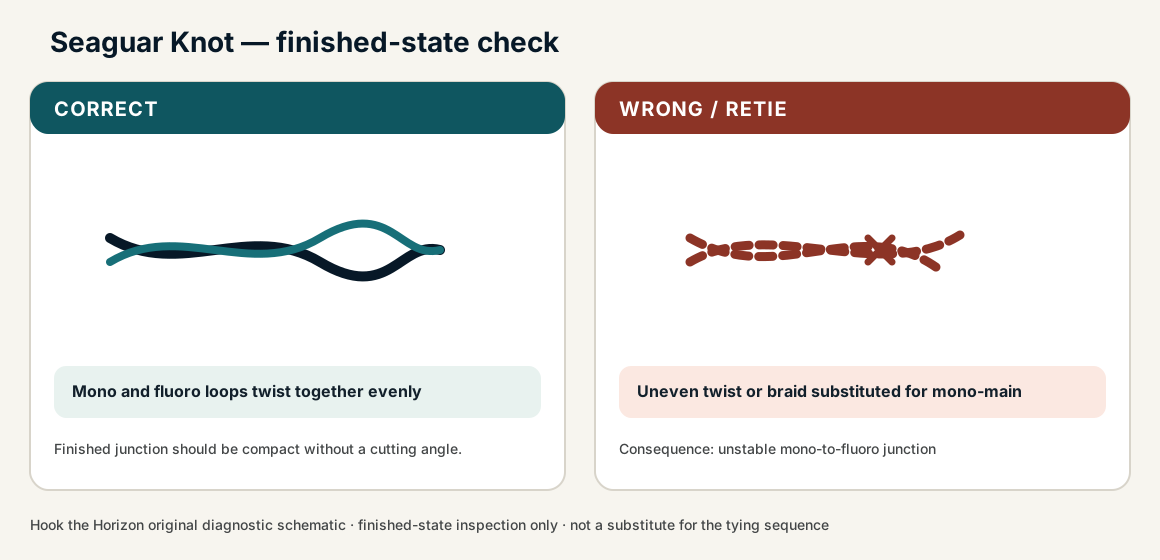
When this family fails, it fails as these. The recovered end still outranks the name.
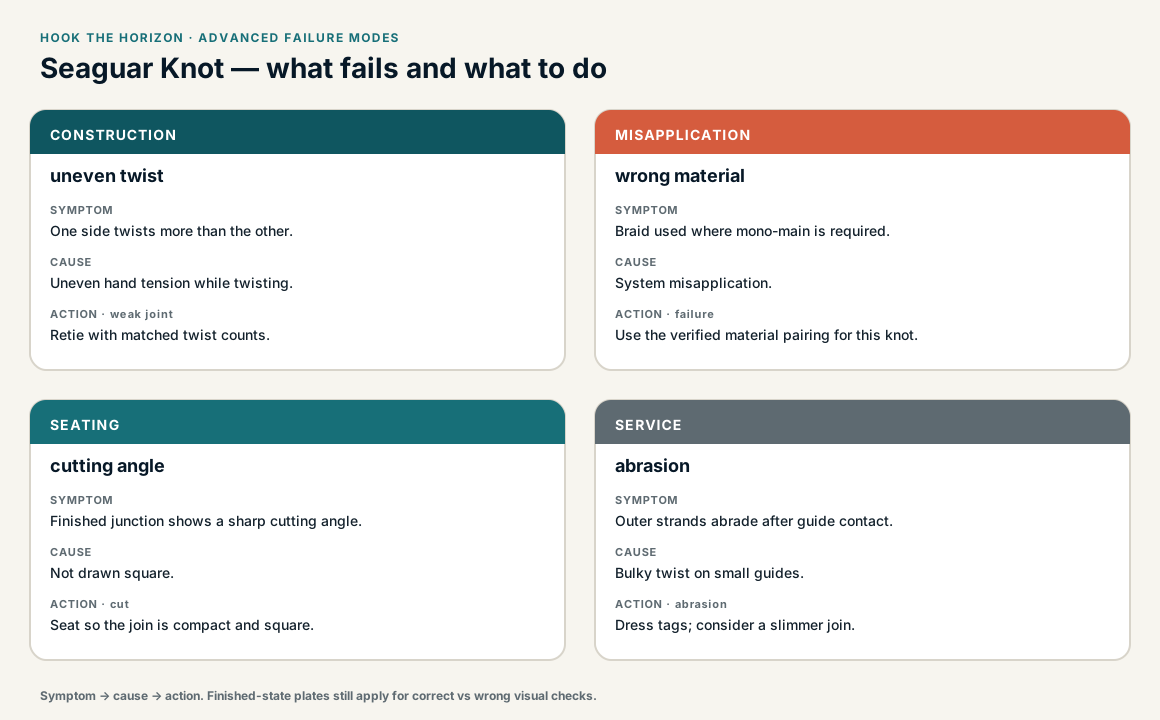
Seaguar Knot — what fails and what to do
Bight in the heavier leader; lighter line wraps the bight, then tucks.
- !Bight in the lighter line — the wraps have nothing to bite
- !Wraps walked off the bight instead of packed against the fold
- !Tag never tucked back through the bight, so the wraps dump
- !Fewer than three twists, so the knot can pull apart
- !Tags left out of the cinch, so they slip back and the knot closes into a lump
- !Twists or pass made wrongly, which shows as no figure eight in the closed knot
Too few twists on fluoro
The join walks
Seaguar grip is twist count plus an even seat, not a single overhand · step 02
Forced diameter jump through this family
Slips — mismatch is a different join
Do not use Seaguar as a step-down join · step 01
Dry fluoro seat glazed the twists
Scored before it ever sees a fish
Wet the seat; heat is a retie · step 03
Slips or breaks at join
Check
- ?Twist count
- ?Even seat
Then
- →Retie
- →Use Blood/Orvis Tippet for closer diameters
One side twists more than the other.
Check
- ?Look for: One side twists more than the other.
Then
- →Retie with matched twist counts.
Braid used where mono-main is required.
Check
- ?Look for: Braid used where mono-main is required.
Then
- →Use the verified material pairing for this knot.
Finished junction shows a sharp cutting angle.
Check
- ?Look for: Finished junction shows a sharp cutting angle.
Then
- →Seat so the join is compact and square.
Outer strands abrade after guide contact.
Check
- ?Look for: Outer strands abrade after guide contact.
Then
- →Dress tags; consider a slimmer join.
Finished check failed — braid is substituted for the mono-main system
Check
- ?mono and fluorocarbon loops twist together evenly
- ?both line ends/leader pass through the shared opening as required
- ?figure-eight-like finished junction is compact
Then
- →Retie. unstable mono-to-fluoro junction.
Too few twists on fluoro
Check
- ?The join walks
- ?Inspect step 02
Then
- →Retie. Do not dress a defective structure and call it seated.
Forced diameter jump through this family
Check
- ?Slips — mismatch is a different join
- ?Inspect step 01
Then
- →Retie. Do not dress a defective structure and call it seated.
Dry fluoro seat glazed the twists
Check
- ?Scored before it ever sees a fish
- ?Inspect step 03
Then
- →Retie. Do not dress a defective structure and call it seated.
Same failure class, different geometry. Open the plates — Diagnose still starts from the symptom.
Not ideal for
- ×Extreme mismatch
- ×Primary braid-to-heavy-leader (use FG/Slim Beauty family)