Spider Hitch
Spider hitch double
Forming a double line quickly. NetKnots says it is not as durable as a Bimini twist but is much faster and easier to tie.
Finished structure
No drawing of this exact knot yet. The written steps are the reference.
- Diagram in reviewA drawing of the Spider Hitch itself is being made. Until then, follow the written steps.
Step 01
Double a length of line to make a long loop, and hold the standing line and tag together so the loop end hangs free.
No drawing of this exact knot yet. The written steps are the reference.
You should now seeA long double with its loop end free and the standing line and tag pinched side by side where the double starts.
If it goes wrongDoubling too little line. There is not enough double to form the small loop, take the wraps, and still leave the double you wanted.
Fix: Let go and double more line before you start the small loop.
Why: Everything after this is tied with the two strands of the double handled as one line, so keep them side by side and untwisted.
- Diagram in reviewA drawing of the Spider Hitch itself is being made. Until then, follow the written steps.
Step 02
Twist a small loop into the doubled line and pinch it between thumb and forefinger. Wrap the double around your thumb and the small loop 5 times, or 15 times with braid.
No drawing of this exact knot yet. The written steps are the reference.
You should now seeA row of side-by-side wraps of doubled line around your thumb and the small loop, with the loop end of the double hanging past your thumb.
If it goes wrongToo few wraps, or wraps that cross over each other on the thumb. You see a turn riding on top of another, or fewer turns than the count.
Fix: Unwind back to the last clean wrap, lay the rest down side by side, and count them again.
Why: The wraps come off the thumb one at a time in step 3, which only works if they lie in order. Braid is slicker than mono, which is why its count is higher.
- Diagram in reviewA drawing of the Spider Hitch itself is being made. Until then, follow the written steps.
Step 03
Pass the loop end of the double through the small loop, then pull the double slowly so the wraps unwind off your thumb one at a time.
No drawing of this exact knot yet. The written steps are the reference.
You should now seeThe wraps leaving your thumb in order and settling around the small loop in a neat column, with the long loop coming out through it.
If it goes wrongPulling fast, or taking the double around the small loop instead of through it. The wraps jump off the thumb together and tangle, or the hitch falls apart when released.
Fix: If the wraps tangle or the double is not through the small loop, pull it all apart and start again from step 2.
Why: The wraps move from lying on your thumb to lying on the small loop. Coming off in order is what keeps the column neat.
- Diagram in reviewA drawing of the Spider Hitch itself is being made. Until then, follow the written steps.
Step 04
Wet the hitch and pull all four strands evenly, the two legs of the double against the standing line and tag, until the wraps close tight. Trim the tag.
No drawing of this exact knot yet. The written steps are the reference.
You should now seeA tight, even column of wraps where the double starts, and a double that stays closed when you pull it hard against the standing line.
If it goes wrongPulling only one leg of the double, or stopping before the wraps close. The column looks loose or lumpy and the double can slide open under a test pull.
Fix: Wet it and pull all four strands evenly again. If the column still moves under a hard test pull, cut it off and tie it again.
Why: NetKnots notes that the spider hitch is not considered as durable as a Bimini twist but is much faster and easier to tie, so give it a hard pull before fishing it.
Spider Hitch — finished-state checks, on the shared reference layout
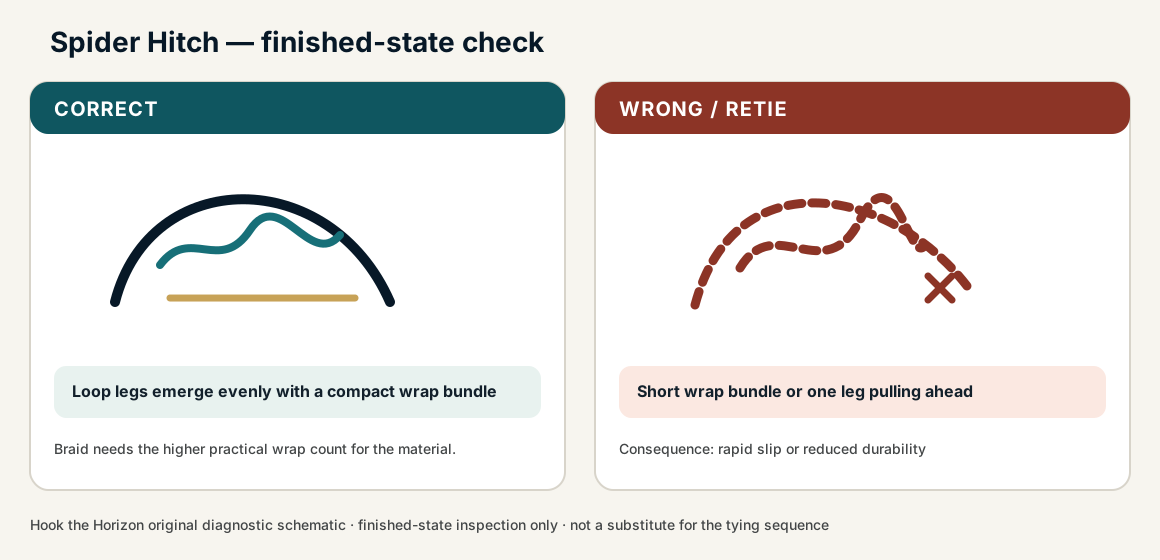
When this family fails, it fails as these. The recovered end still outranks the name.
Spider Hitch — what fails and what to do
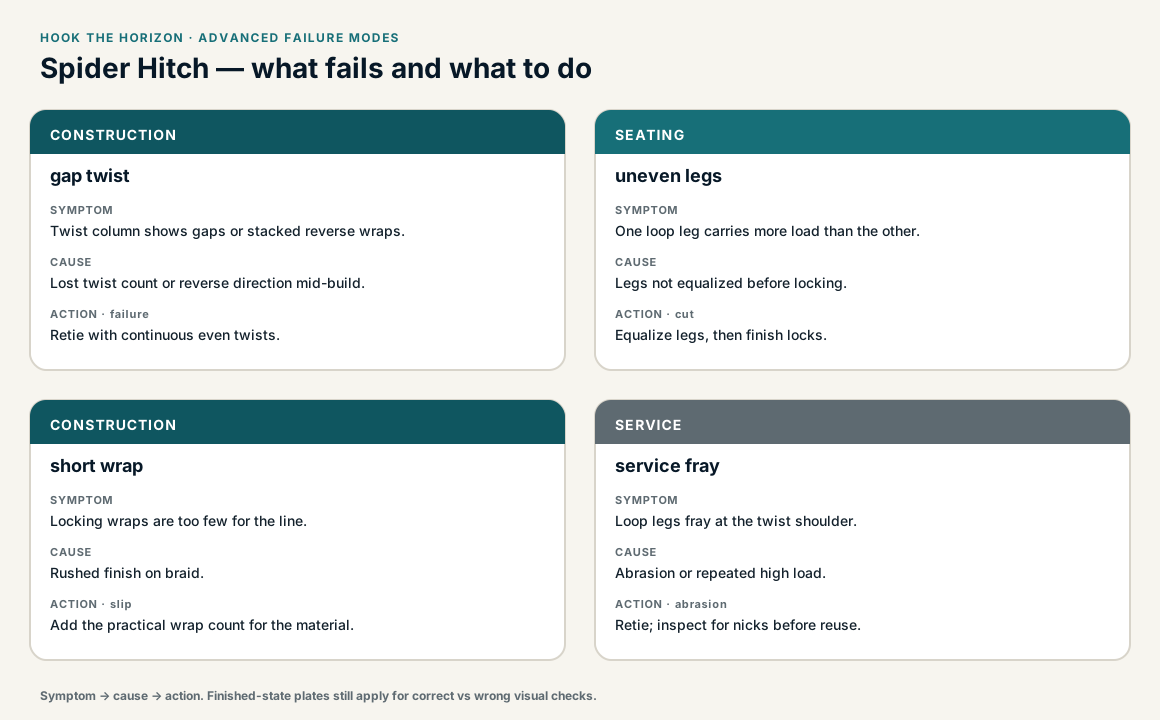
A load-bearing loop of doubled line, locked so it cannot crawl back.
- !Twists or wraps not packed before the lock
- !Lock that crawls back into the double
- !Uneven legs — one side takes the shock
- !Double taken around the small loop instead of through it, so the hitch falls apart
- !Wraps crossed on the thumb or pulled off together, so they tangle
- !Wraps not closed tight on all four strands, so the double slides open under a hard pull
- !Braid tied with only the 5 wraps given for mono
Hitch column unravels — double is gone
The doubled section fails
Wrap friction under tension holds the Spider; a collapse is a retie · step 03
Under-wrapped or messy hitch column
Weak double you cannot trust on a fish
Even wrap count is the Spider; too few wraps is a different hitch · step 02
Bight never completed the hitch pass-through
Unreliable lock
The loop must complete the hitch before you load the double · step 03
Double unravels or shortens under load
Check
- ?Wrap count
- ?Hitch column density
Then
- →Retie with more wraps
- →Build a Bimini when time allows
Twist column shows gaps or stacked reverse wraps.
Check
- ?Look for: Twist column shows gaps or stacked reverse wraps.
Then
- →Retie with continuous even twists.
One loop leg carries more load than the other.
Check
- ?Look for: One loop leg carries more load than the other.
Then
- →Equalize legs, then finish locks.
Locking wraps are too few for the line.
Check
- ?Look for: Locking wraps are too few for the line.
Then
- →Add the practical wrap count for the material.
Loop legs fray at the twist shoulder.
Check
- ?Look for: Loop legs fray at the twist shoulder.
Then
- →Retie; inspect for nicks before reuse.
Finished check failed — short wrap bundle in slick braid
Check
- ?loop legs emerge evenly
- ?wrap bundle is compact
- ?braid uses the higher practical wrap count required by the material
Then
- →Retie. rapid slip or reduced durability.
Hitch column unravels — double is gone
Check
- ?The doubled section fails
- ?Inspect step 03
Then
- →Retie. Do not dress a defective structure and call it seated.
Under-wrapped or messy hitch column
Check
- ?Weak double you cannot trust on a fish
- ?Inspect step 02
Then
- →Retie. Do not dress a defective structure and call it seated.
Bight never completed the hitch pass-through
Check
- ?Unreliable lock
- ?Inspect step 03
Then
- →Retie. Do not dress a defective structure and call it seated.
Same failure class, different geometry. Open the plates — Diagnose still starts from the symptom.
Not ideal for
- ×Maximum big-game double-line strength (Bimini still preferred when you can build it)
- ×Situations where the hitch can work loose under cyclic load without inspection