Bimini Twist
Bimini
Making a double line with a loop at the end, for loop-to-loop leader connections or as the doubled line in knots such as the Yucatan.
A long doubled section twisted or plaited into a column and locked at the far end.
Finished structure
A long doubled section twisted or plaited into a column and locked at the far end.
step 01 · schematic A long doubled section — this is the whole knot.
Step 01
Double a long length of line into a loop, with a long tag lying beside the standing line.
A long doubled section — this is the whole knot.
You should now seeA long loop of doubled line, longer than the double you want to finish with, and a tag long enough to roll back over the twists and tie the hitches.
If it goes wrongStarting with too short a loop or tag. The loop will not reach over your knee once the twists are in, or the tag runs out before the half hitches.
Fix: Start again with more line doubled. The spare is trimmed off at the end.
Why: The twists use up part of the loop, and the tag has to roll back over every twist and then tie several hitches, so both need extra length.
step 02 · schematic Twists or plaits into a tight column.
Step 02
Spin the end of the loop to put at least 20 twists in the doubled line, then slip the loop over your knee and pull the standing line and tag apart to keep the twists tight.
Twists or plaits into a tight column.
You should now seeA tight, even column of twists running from your hands toward the loop, with the loop held open over your knee.
If it goes wrongLetting the pull ease while getting the loop over your knee. The twists loosen, bunch up, or leave gaps along the column.
Fix: If gaps appear, take the loop off, untwist it, and put the twists in again before putting tension back on.
Why: NetKnots uses 20 twists. Animated Knots recommends about 30 for mono and more for braid. Put the full count in now, because twists cannot be added once the tag starts rolling back.
step 03 · schematic Lock at the far end so the column cannot unwind.
Step 03
Keep the tension on and lower the hand holding the tag until it rolls back over the twists, spreading the loop so the tag wraps down to the end. Lock it with a half hitch around one leg of the loop.
Lock at the far end so the column cannot unwind.
You should now seeThe tag wound tightly over the twists in touching turns all the way down to the loop, held there by a single half hitch.
If it goes wrongEasing the tension or letting go before the half hitch is on. The tag unrolls and the twists spring loose, which shows as the wraps opening up along the column.
Fix: A Bimini that has unwound cannot be patched. Untwist the line and start again from step 2.
Why: Spreading the two legs of the loop is what drives the tag down over the twists. The single half hitch only holds everything while you tie the final lock.
step 04 · schematic Column even; lock seated; tags short.
Step 04
Tie 3 to 5 half hitches with the tag around both legs of the loop, working back toward the knot. Pull them tight against the base of the twists and trim the tag to about 6 mm (a quarter inch).
Column even; lock seated; tags short.
You should now seeA neat collar of hitches snug against the end of the twists, a short tag, and a loop that keeps its full length when pulled.
If it goes wrongToo few hitches, or hitches left loose away from the twists. The collar slides and the twists start to unwind when the double is loaded.
Fix: If the tag is still long, add hitches and pull them down tight. If the tag is already trimmed and the collar moves, tie the knot again.
Why: The hitches around both legs stop the tag unrolling from the twists. Working them back toward the knot packs them against the column instead of leaving a gap.
Bimini Twist — finished-state checks, on the shared reference layout
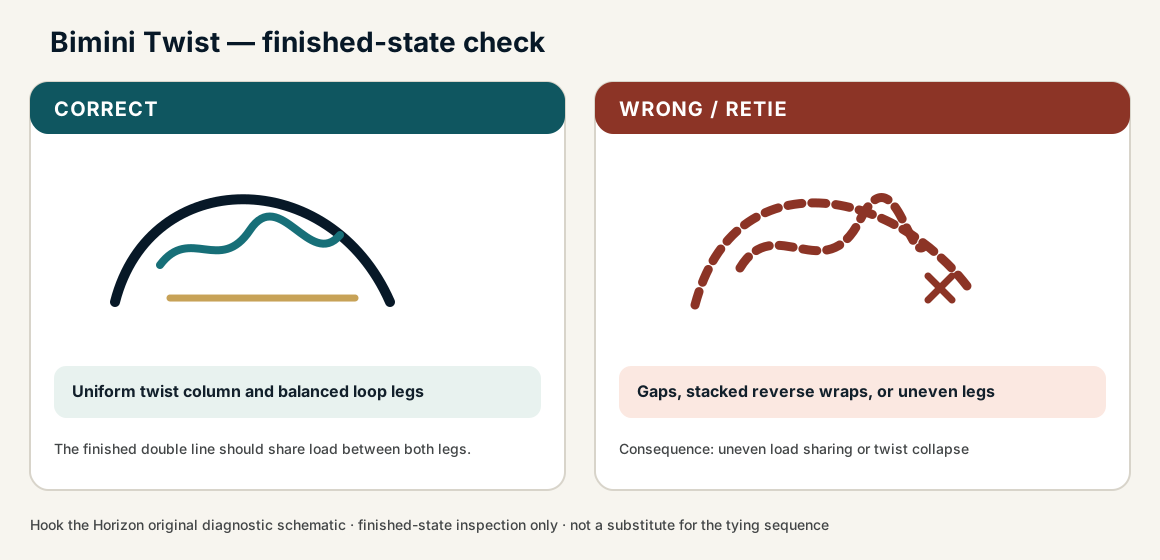
When this family fails, it fails as these. The recovered end still outranks the name.
Bimini Twist — what fails and what to do
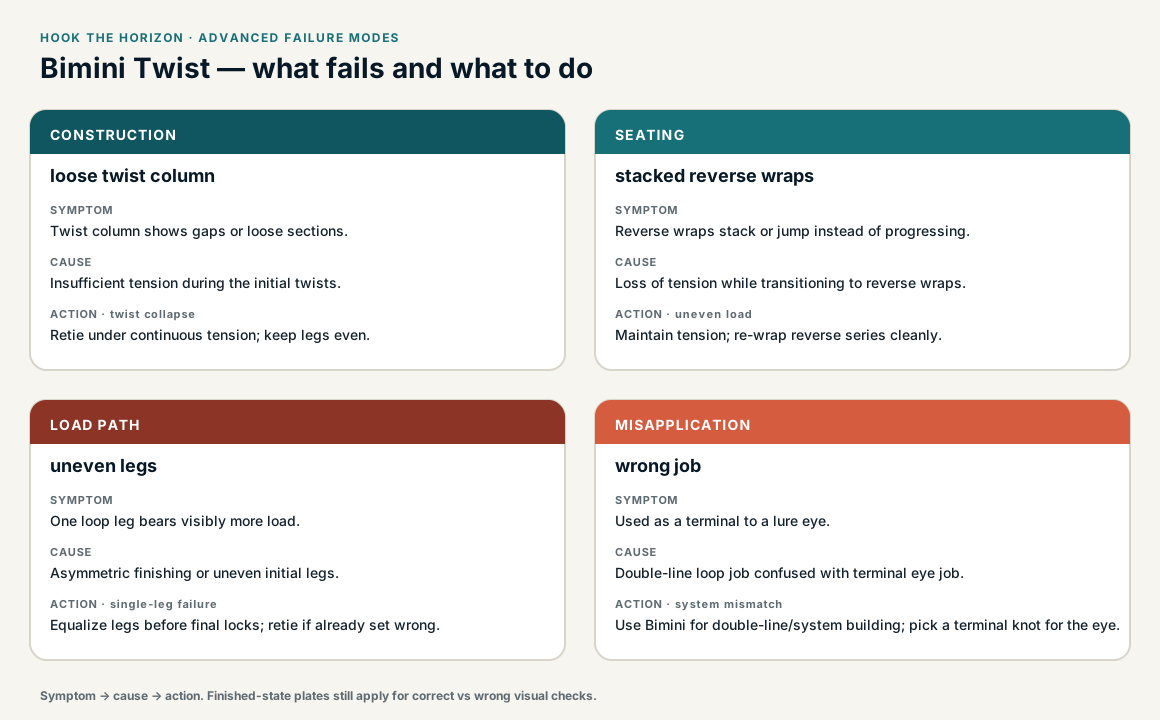
A load-bearing loop of doubled line, locked so it cannot crawl back.
- !Twists or wraps not packed before the lock
- !Lock that crawls back into the double
- !Uneven legs — one side takes the shock
- !Tension eased before the half hitch, so the tag unrolls and the twists spring loose
- !Too few twists. Animated Knots cites tests where about twelve turns failed
- !Locking hitches too few or loose, so the collar slides and the twists unwind under load
- !Hit with sudden jerks while dry, which heats the knot by friction and breaks it at lower loads
Twists unravel — the double is gone
Double-line fails
Tension plus the lock create the Bimini; slack twists dump · step 03
Loose or gapped twist column
Weak double
Dense even twists are the Bimini; gaps are a different structure · step 02
Lock hitches never finished the Bimini
Unravels under load
The end lock is not optional — an unlocked column walks · step 04
Twists unravel before fishing
Check
- ?Inspect twist column density
Then
- →Practice with heavier cord
- →Use a partner for tension
- →Watch a long-form vetted demo
Twist column shows gaps or loose sections.
Check
- ?Look for: Twist column shows gaps or loose sections.
Then
- →Retie under continuous tension; keep legs even.
Reverse wraps stack or jump instead of progressing.
Check
- ?Look for: Reverse wraps stack or jump instead of progressing.
Then
- →Maintain tension; re-wrap reverse series cleanly.
One loop leg bears visibly more load.
Check
- ?Look for: One loop leg bears visibly more load.
Then
- →Equalize legs before final locks; retie if already set wrong.
Used as a terminal to a lure eye.
Check
- ?Look for: Used as a terminal to a lure eye.
Then
- →Use Bimini for double-line/system building; pick a terminal knot for the eye.
Finished check failed — twist column contains loose sections
Check
- ?twist column is uniform under tension
- ?reverse wraps progress without gaps
- ?finished double-line loop has two balanced legs
Then
- →Retie. uneven load sharing or twist collapse.
Twists unravel — the double is gone
Check
- ?Double-line fails
- ?Inspect step 03
Then
- →Retie. Do not dress a defective structure and call it seated.
Loose or gapped twist column
Check
- ?Weak double
- ?Inspect step 02
Then
- →Retie. Do not dress a defective structure and call it seated.
Lock hitches never finished the Bimini
Check
- ?Unravels under load
- ?Inspect step 04
Then
- →Retie. Do not dress a defective structure and call it seated.
Same failure class, different geometry. Open the plates — Diagnose still starts from the symptom.
Not ideal for
- ×Quick bankside re-ties
- ×Beginners without practice gear