King Sling
King sling loop
Tying a lure, hook or fly to braid or mono with an open loop, so the bait can move more naturally.
Finished structure
No drawing of this exact knot yet. The written steps are the reference.
- Diagram in reviewA drawing of the King Sling itself is being made. Until then, follow the written steps.
Step 01
Thread the tag through the eye of the lure and lay it back alongside the standing line, then fold that doubled section back on itself to make a loop.
No drawing of this exact knot yet. The written steps are the reference.
You should now seeA doubled line running back from the eye with a loop folded into it, and enough tag beyond the fold to hold on to.
If it goes wrongLeaving too short a tag. The twists and the pass through the loop use it up, and the tag slips out before the knot closes.
Fix: Pull more line through the eye before folding the loop, so there is tag to spare after the twists.
Why: The folded loop becomes the twisted double loop in the next step, and the lure passes through it to lock the twists.
- Diagram in reviewA drawing of the King Sling itself is being made. Until then, follow the written steps.
Step 02
Put an index finger into the end of the loop and turn it counter-clockwise three or four times while your other hand holds the lure and the line.
No drawing of this exact knot yet. The written steps are the reference.
You should now seeThree or four even twists in the doubled line between your finger and the lure, with a double loop around your fingertip.
If it goes wrongTwisting without holding the lure and line, so the twists bunch unevenly or spin back out. The twisted section looks lumpy or unwinds when you pause.
Fix: Let the twists out, hold the lure and line firmly, and turn the loop again, counting each turn.
Why: Holding the lure stops the doubled line from spinning, so each turn of the finger puts one even twist into the line.
- Diagram in reviewA drawing of the King Sling itself is being made. Until then, follow the written steps.
Step 03
Pass the hook or lure through the twisted double loop on your finger. If you are tying an open loop with no lure on it, pass the end of the loop through instead.
No drawing of this exact knot yet. The written steps are the reference.
You should now seeThe lure all the way through the double loop, with the twisted section held between the double loop and the loop the lure hangs from.
If it goes wrongPassing the lure through only one strand of the double loop, or letting the twists unwind as the lure goes through. The knot pulls out into plain line.
Fix: Back the lure out, twist the loop again and pass the lure through both strands of the double loop together.
Why: This pass traps the twists. Without it, pulling on the line only straightens them out.
- Diagram in reviewA drawing of the King Sling itself is being made. Until then, follow the written steps.
Step 04
Wet the knot. Pull the standing line and the tag together in one direction and the lure in the other until the knot closes, then trim the tag.
No drawing of this exact knot yet. The written steps are the reference.
You should now seeA compact knot at the top of an open loop, the lure swinging freely in the loop, and a short tag.
If it goes wrongPulling on dry line, or leaving the tag out of the pull. The knot closes lopsided and the tag creeps back into it.
Fix: If the knot is lopsided or the tag has shortened, cut it off and tie it again, holding the tag with the standing line during the pull.
Why: NetKnots gives it as suitable for fairly heavy monofilament, up to about 50 pound breaking strength. Pulling the tag with the standing line closes both sides of the knot together.
King Sling — finished-state checks, on the shared reference layout
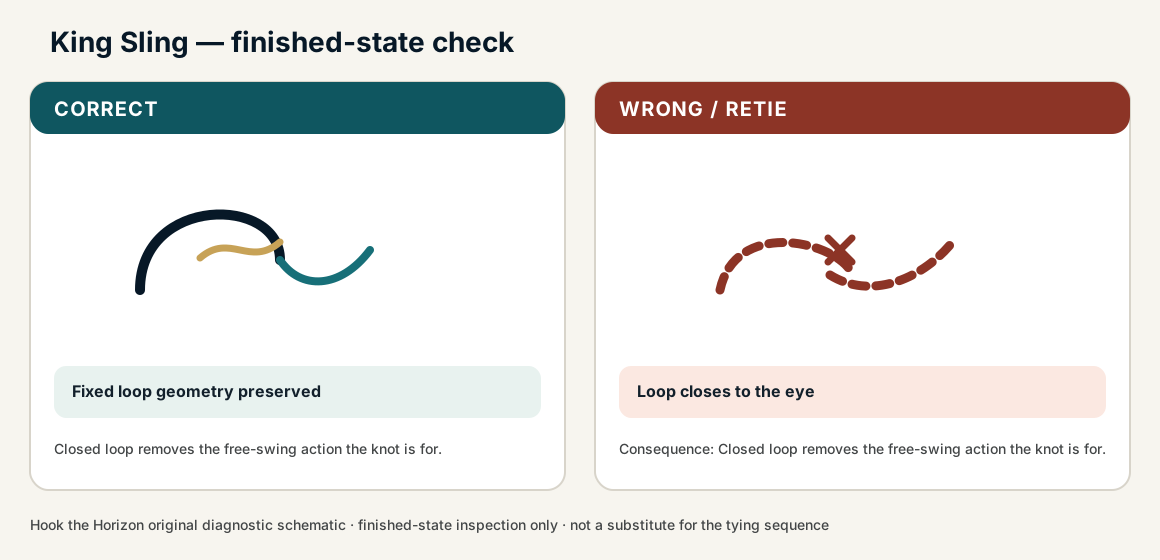
When this family fails, it fails as these. The recovered end still outranks the name.
A loop that stays the size you made, with a return that cannot cinch.
- !Loop cinched around the hardware — action is dead
- !Return path reversed, so it becomes a slip loop
- !Fluoro in a lock that only behaves on mono
- !Lure passed through one strand of the double loop, so the knot pulls out into plain line
- !Twists unwound before the lure goes through, so the pass has nothing to trap
- !Closed dry or without the tag in the pull, so it sits lopsided and the tag creeps back in
Wrong loop order
A slip loop, not a King Sling
Order is the lock on this doubled-line loop · step 01
Loop left larger than the system needs
Bulk in the guides and a walk-prone eye
This is a system loop, not a free-swing lure loop · step 02
Used as a free-swing lure loop
Wrong job — pick a non-slip terminal
King Sling is a doubled-line eye, not a Rapala · step 04
Loop slips or collapses
Check
- ?Loop stability under pull
Then
- →Retie
- →Use Perfection Loop as alternate
Finished check failed — Loop closes to the eye
Check
- ?Fixed loop geometry preserved
- ?Wraps ordered
- ?Loop action free at the lure
Then
- →Retie. Closed loop removes the free-swing action the knot is for.
Wrong loop order
Check
- ?A slip loop, not a King Sling
- ?Inspect step 01
Then
- →Retie. Do not dress a defective structure and call it seated.
Loop left larger than the system needs
Check
- ?Bulk in the guides and a walk-prone eye
- ?Inspect step 02
Then
- →Retie. Do not dress a defective structure and call it seated.
Used as a free-swing lure loop
Check
- ?Wrong job — pick a non-slip terminal
- ?Inspect step 04
Then
- →Retie. Do not dress a defective structure and call it seated.
Same failure class, different geometry. Open the plates — Diagnose still starts from the symptom.
Not ideal for
- ×Free-swing lure action (prefer non-slip lure loops)
- ×Braid-only terminals and heavy shock leaders