Non-Slip Mono Loop
Interlock
Does not pick a knot
This page does not pick a knot for you. DNA, molecules, quantum braids and vortices stay off Decide.
Finished structure
Drawn from a rope model of this knot: which strand passes over which comes from where the rope actually lies.
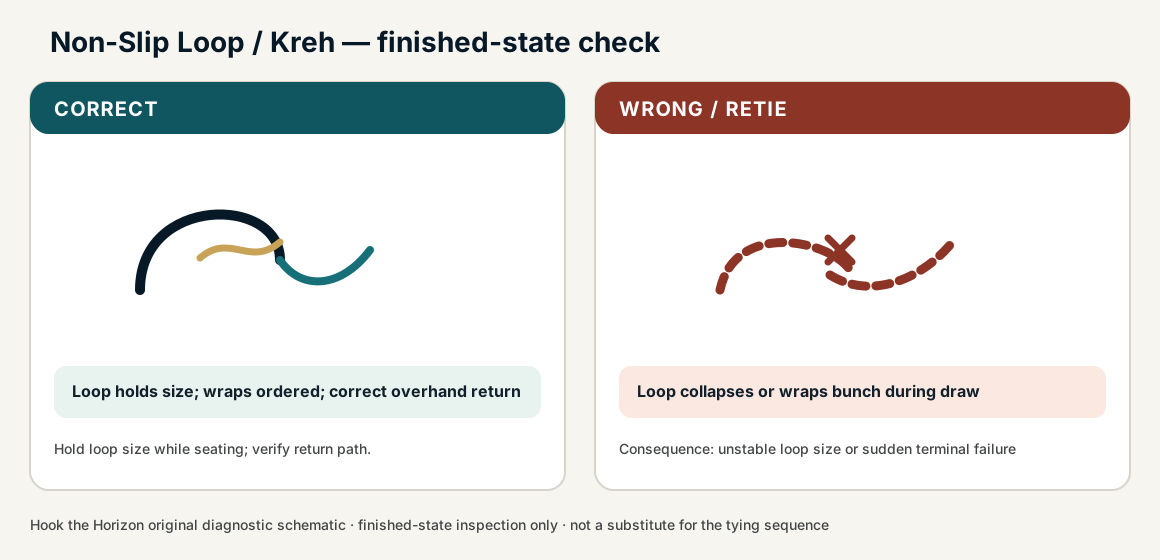
Non-Slip Mono Loop — finished-state checks, on the shared reference layout
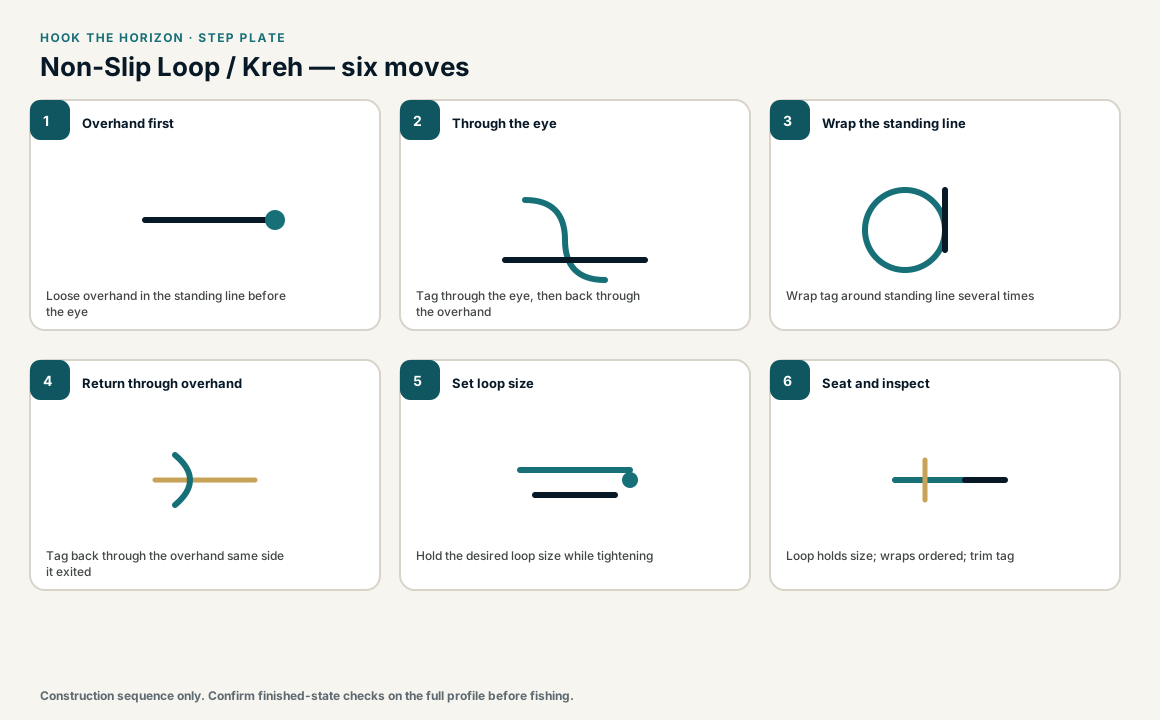
Non-Slip Mono Loop — construction sequence
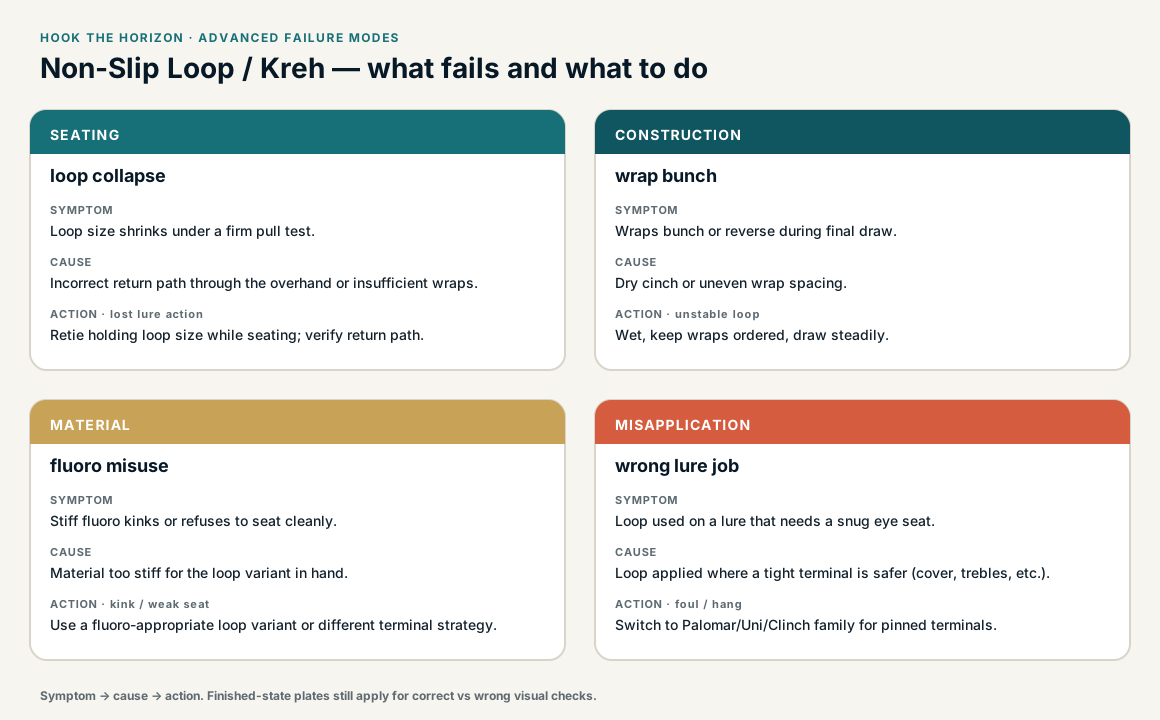
When this family fails, it fails as these. The recovered end still outranks the name.
Non-Slip Mono Loop — what fails and what to do
A loop that stays the size you made, with a return that cannot cinch.
- !Loop cinched around the hardware — action is dead
- !Return path reversed, so it becomes a slip loop
- !Fluoro in a lock that only behaves on mono
- !Tag brought back through the overhand from the wrong side
- !Tag not passed through the overhand, so the loop slides shut on the eye
- !Standing line pulled before the turns are snug, closing the loop toward the eye
- !Too few turns on light line to build enough grip
Too few wraps on light line
The loop walks down and becomes a noose
Wrap friction above the overhand is what holds loop size · step 03
Loop cinched closed while seating
Free-swing is gone and the noose can cut
Seat the wraps without shrinking the overhand loop · step 04
Tag missed the overhand
This is a slip loop, not a non-slip
The tag path through the overhand is the lock · step 02
Loop cinches closed
Check
- ?Loop holds under moderate pull
Then
- →Retie carefully
- →Compare to diagram
Loop size shrinks under a firm pull test.
Check
- ?Look for: Loop size shrinks under a firm pull test.
Then
- →Retie holding loop size while seating; verify return path.
Wraps bunch or reverse during final draw.
Check
- ?Look for: Wraps bunch or reverse during final draw.
Then
- →Wet, keep wraps ordered, draw steadily.
Stiff fluoro kinks or refuses to seat cleanly.
Check
- ?Look for: Stiff fluoro kinks or refuses to seat cleanly.
Then
- →Use a fluoro-appropriate loop variant or different terminal strategy.
Loop used on a lure that needs a snug eye seat.
Check
- ?Look for: Loop used on a lure that needs a snug eye seat.
Then
- →Switch to Palomar/Uni/Clinch family for pinned terminals.
Finished check failed — loop shrinks or collapses under a pull test
Check
- ?loop holds the intended size after seating
- ?wraps form cleanly around the standing line
- ?tag returns through the overhand from the same side it exited
Then
- →Retie. unstable loop size or sudden terminal failure.
Too few wraps on light line
Check
- ?The loop walks down and becomes a noose
- ?Inspect step 03
Then
- →Retie. Do not dress a defective structure and call it seated.
Loop cinched closed while seating
Check
- ?Free-swing is gone and the noose can cut
- ?Inspect step 04
Then
- →Retie. Do not dress a defective structure and call it seated.
Tag missed the overhand
Check
- ?This is a slip loop, not a non-slip
- ?Inspect step 02
Then
- →Retie. Do not dress a defective structure and call it seated.
Same failure class, different geometry. Open the plates — Diagnose still starts from the symptom.
What holds it
- ·A non-slip lure loop must stay open under a straight pull. Collapse means the return path failed — it is a noose, not a tight loop.
- ·Kreh / Rapala / Homer Rhode families share that job. They are not closed mathematical knots.
What topology does not predict
- ·Loop size is set when you tie. It is not a crossing number.
- ·Free-swing is already one of the things Decide weighs. This page does not change it.
- ·Heavy-leader glaze is material, not topology.
Not for
- ·A standing mid-line loop or a king-sling-style loop in the line
- ·Braid-only terminals where the record already rules the family out
- ·Maximum slim fixed eye connections
- ·Maximum slim fixed-eye terminals — this loop is extra bulk
Same pattern, different job
No sourced twin among these knots. Related knots stay on the Library card.
- Knot — practical vs mathematical (Wikipedia) — Closed-curve knot theory ignores friction. Practical knots are classified by function.
- Patil et al. — Topological mechanics of knots and tangles (Science, 2020) — Lab rods: simple topological counts correlate with stability. Not a field rating table.
- Animated Knots — Non-Slip Mono Loop
- FishingKnots.com Knot Strength Database — Recovered from this record’s historical modelSourceId registry.
- Fishing with Nat — How to tie a Non-Slip Loop Knot — Cited tying video already attached to this record.