Needle Knot
Coil on coating
Does not pick a knot
This page does not pick a knot for you. DNA, molecules, quantum braids and vortices stay off Decide.
Finished structure
No drawing of this exact knot yet. The written steps are the reference.
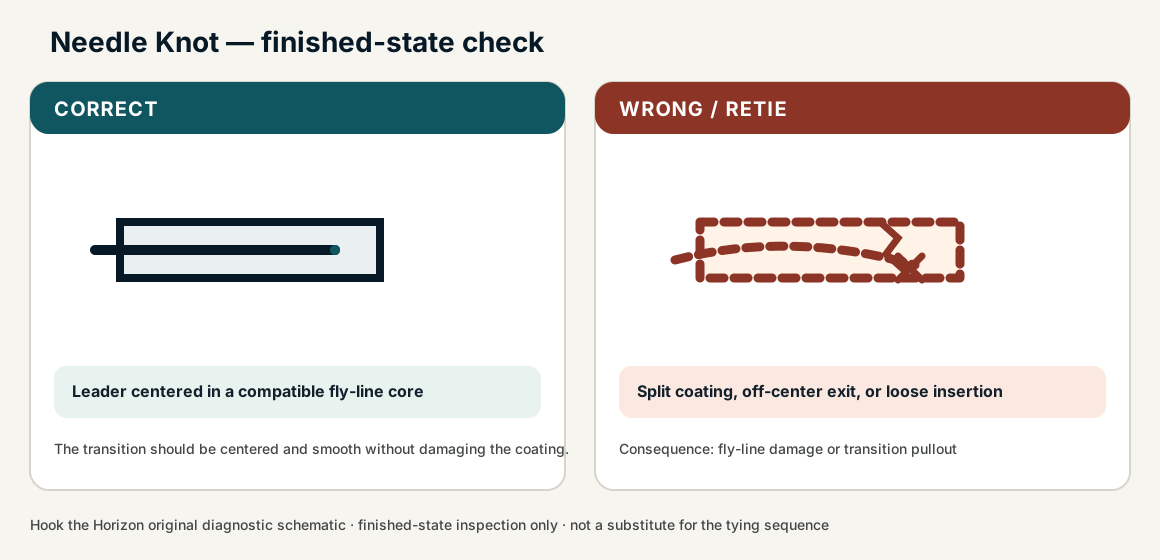
Needle Knot — finished-state checks, on the shared reference layout
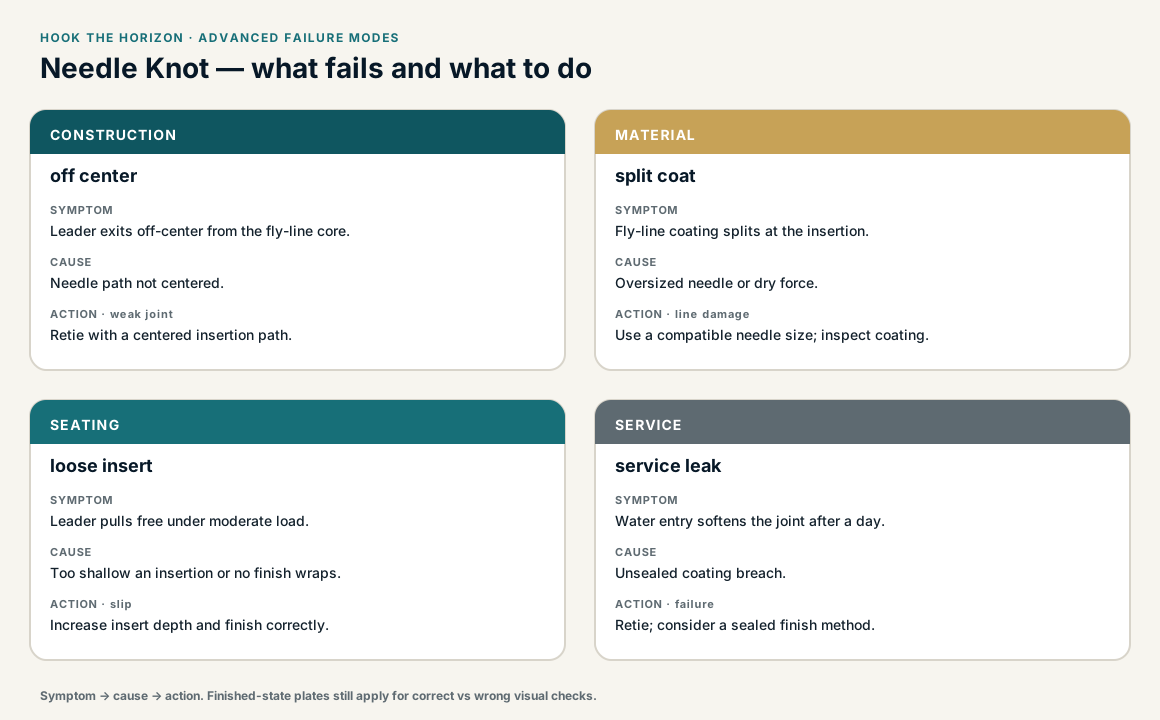
When this family fails, it fails as these. The recovered end still outranks the name.
Needle Knot — what fails and what to do
Fine tippet at the eye, or fly-line to leader with a tube or nail.
- !Hitch path around the eye instead of through it
- !Single pass where two were the job
- !Gap at the tube or nail on a fly-line join
- !Coating split by the needle, leaving a weak spot the wraps cannot cover
- !Butt not passed back under the wraps, so the coil unwinds when the leader is pulled
- !Wraps crossed or gapped, so the coil does not close evenly
- !Coil set away from the side hole, so the leader bends where it leaves the fly line
Gapped wraps on the fly-line tip
Leader slides off the coating
The coil must sit even on the fly line, not in the air · step 02
Shallow needle path or coil not on the fly line
Walks out of the coating
Insertion depth is the trap; a surface coil is a Nail Knot without the nail · step 01
Needle nicked the core
A dead fly line — not a knot you can dress out
Core damage is a cut-off, not a retie of the same coil · step 01
Leader slides off fly-line tip
Check
- ?Coil uniformity on tip
Then
- →Retie
- →Confirm needle path did not cut core
Leader exits off-center from the fly-line core.
Check
- ?Look for: Leader exits off-center from the fly-line core.
Then
- →Retie with a centered insertion path.
Fly-line coating splits at the insertion.
Check
- ?Look for: Fly-line coating splits at the insertion.
Then
- →Use a compatible needle size; inspect coating.
Leader pulls free under moderate load.
Check
- ?Look for: Leader pulls free under moderate load.
Then
- →Increase insert depth and finish correctly.
Water entry softens the joint after a day.
Check
- ?Look for: Water entry softens the joint after a day.
Then
- →Retie; consider a sealed finish method.
Finished check failed — leader is forced into incompatible construction
Check
- ?leader sits centered in a compatible fly-line core
- ?core/coating is not split
- ?external securing turns are compact and smooth
Then
- →Retie. fly-line damage or transition pullout.
Gapped wraps on the fly-line tip
Check
- ?Leader slides off the coating
- ?Inspect step 02
Then
- →Retie. Do not dress a defective structure and call it seated.
Shallow needle path or coil not on the fly line
Check
- ?Walks out of the coating
- ?Inspect step 01
Then
- →Retie. Do not dress a defective structure and call it seated.
Needle nicked the core
Check
- ?A dead fly line — not a knot you can dress out
- ?Inspect step 01
Then
- →Retie. Do not dress a defective structure and call it seated.
Same failure class, different geometry. Open the plates — Diagnose still starts from the symptom.
What holds it
- ·Nail and needle knots live on a fly-line coating (and, for the needle, a pierced core). The coil is the join.
- ·A nicked core is a dead tip, not a knot you can dress out.
What topology does not predict
- ·Coating diameter and core integrity are not topological invariants.
- ·Loop-to-loop vs nail is a job choice already in Decide.
- ·No rating is invented for hollow vs solid fly line.
Not for
- ·Braid-to-fluoro in the guides as a general-purpose join
- ·Fishing a scored, pierced tip
- ·Braid-to-leader offshore joins
- ·No-tool bankside reties
Same pattern, different job
No sourced twin among these knots. Related knots stay on the Library card.
- Knot — practical vs mathematical (Wikipedia) — Closed-curve knot theory ignores friction. Practical knots are classified by function.
- Patil et al. — Topological mechanics of knots and tangles (Science, 2020) — Lab rods: simple topological counts correlate with stability. Not a field rating table.
- FishingKnots.com (Nail/Needle family band) — Recovered from the historical MODEL_SOURCES registry.
- Hook the Horizon — Needle Knot — Recovered from the same record’s historical Hook the Horizon resource URL.
- NetKnots — Needle Knot exact tying sequence
- RIO Products — A short film showing how to tie a Needle Knot — Cited tying video already attached to this record.