Improved Clinch Knot
Constriction · Wrap stack
Does not pick a knot
This page does not pick a knot for you. DNA, molecules, quantum braids and vortices stay off Decide.
Finished structure
Drawn from a rope model of this knot: which strand passes over which comes from where the rope actually lies.
Improved Clinch Knot — construction sequence
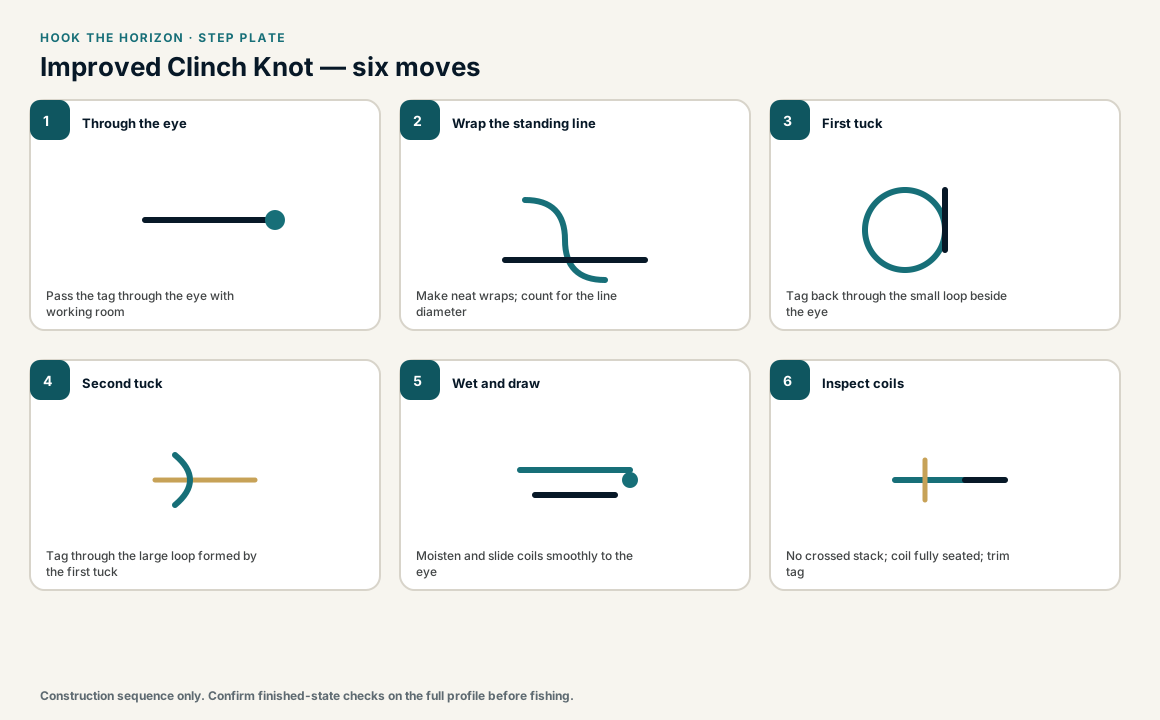
When this family fails, it fails as these. The recovered end still outranks the name.
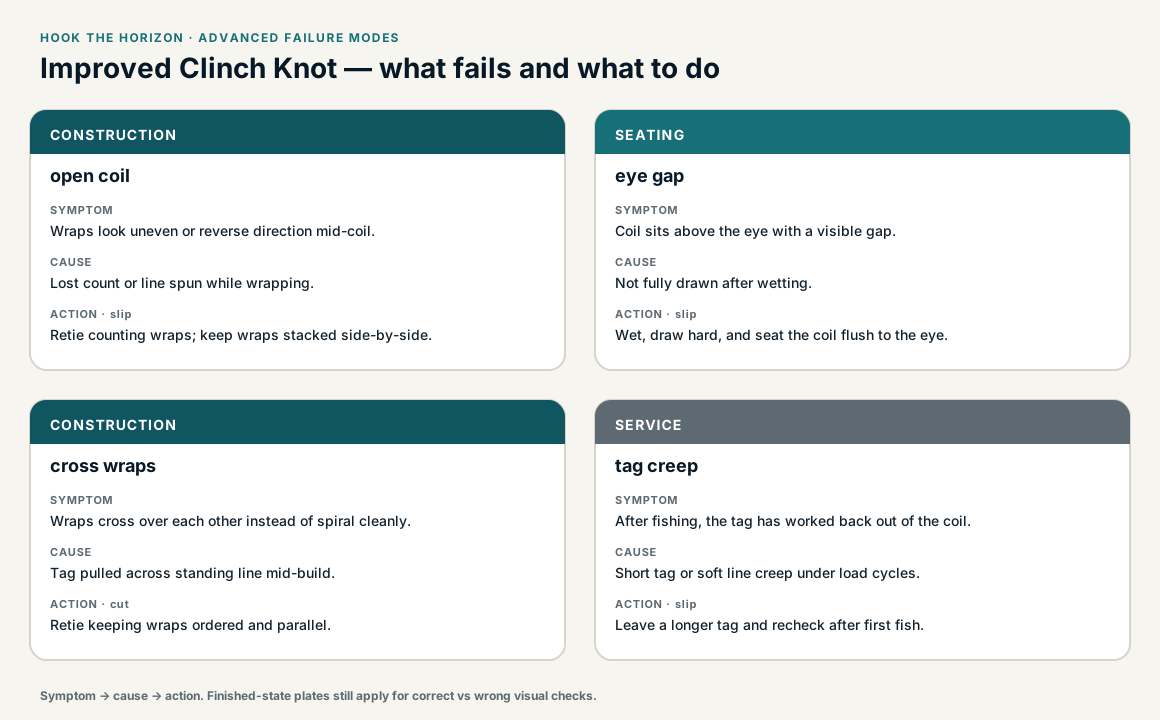
Improved Clinch Knot — what fails and what to do
Wraps down the standing part, then a tuck that jams the barrel to the eye.
- !Wraps walked or crossed — load on one turn of the barrel
- !Barrel never jammed to the eye, so the tuck is decoration
- !Tag never tucked, or the extra Improved / Trilene pass missing
- !Tuck through the large loop left out, leaving a plain clinch
- !Tied in braided line
- !Pulled tight dry or fast, leaving the line crinkled
- !Turns crossed, so they press on one spot of the standing line
Crossed wraps before the improved tuck
Load on one turn; the tuck cannot save a messy stack
Improved clinch grip is parallel wraps plus the extra tuck · step 02
Stack never seated to the eye
Walks off under load
An unseated clinch does not lock, improved tuck or not · step 04
Skipped the improved tuck
You tied a plain clinch — slips on braid, weak on fluoro
The second tuck through the eye loop is why this is not a clinch · step 03
Final tension never locked the tuck
The improved pass sits open and unravels
Opposing tension after the tuck is the lock · step 04
Unwraps under load
Check
- ?Count wraps
- ?Confirm tag path
Then
- →Retie with 5–7 wraps
- →Use Palomar or Uni on braid
Wraps look uneven or reverse direction mid-coil.
Check
- ?Look for: Wraps look uneven or reverse direction mid-coil.
Then
- →Retie counting wraps; keep wraps stacked side-by-side.
Coil sits above the eye with a visible gap.
Check
- ?Look for: Coil sits above the eye with a visible gap.
Then
- →Wet, draw hard, and seat the coil flush to the eye.
Wraps cross over each other instead of spiral cleanly.
Check
- ?Look for: Wraps cross over each other instead of spiral cleanly.
Then
- →Retie keeping wraps ordered and parallel.
After fishing, the tag has worked back out of the coil.
Check
- ?Look for: After fishing, the tag has worked back out of the coil.
Then
- →Leave a longer tag and recheck after first fish.
Finished check failed — wraps stack or cross
Check
- ?wraps spiral neatly without overlap
- ?tag returns through both required openings
- ?coil slides fully to the eye during seating
Then
- →Retie. unraveling, slippage, or heat-damaged seating.
Crossed wraps before the improved tuck
Check
- ?Load on one turn; the tuck cannot save a messy stack
- ?Inspect step 02
Then
- →Retie. Do not dress a defective structure and call it seated.
Stack never seated to the eye
Check
- ?Walks off under load
- ?Inspect step 04
Then
- →Retie. Do not dress a defective structure and call it seated.
Skipped the improved tuck
Check
- ?You tied a plain clinch — slips on braid, weak on fluoro
- ?Inspect step 03
Then
- →Retie. Do not dress a defective structure and call it seated.
Same failure class, different geometry. Open the plates — Diagnose still starts from the symptom.
What holds it
- ·The eye is hardware. The knot is an open tangle around that eye. Ends stay ends.
- ·Seating (wet set, even wraps, tag orientation) is the mechanical record already on the knot. Theory adds no extra rating.
What topology does not predict
- ·Trefoil / unknot classification does not apply to a Palomar or clinch.
- ·Fluoro glaze, pigtail slip and nick-at-the-guides are forensic, not topological.
- ·No strength percentage is computed here.
Not for
- ·A free-swing lure loop — use a non-slip loop family
- ·Using an invariant as a reason to keep a glazed terminal
- ·Braid terminals
- ·Maximum strength critical connections
Same pattern, different job
- Diagram in reviewClinch Knot
Plain clinch is the same wrap-stack without the improved tuck.
- Knot — practical vs mathematical (Wikipedia) — Closed-curve knot theory ignores friction. Practical knots are classified by function.
- Patil et al. — Topological mechanics of knots and tangles (Science, 2020) — Lab rods: simple topological counts correlate with stability. Not a field rating table.
- Animated Knots — Improved Clinch
- Fishing with Nat — How to Tie the Improved Clinch Knot — Cited tying video already attached to this record.